Carbohydrate totals are not reported: the ingredient sources use different definitions (CoFID available carbohydrate and US-label total carbohydrate including fibre), which cannot be added consistently. Energy, protein and fat are estimates from the listed weighed ingredients; fibre is shown only where every ingredient has supporting data. These recipes are not suitable for carbohydrate counting.
These recipes have been checked on paper, but have not been kitchen tested. Cooking times are estimates; use the stated doneness checks. Finished weights, texture and portion volumes have not been measured.
Lunch / Recipe 6 of 8
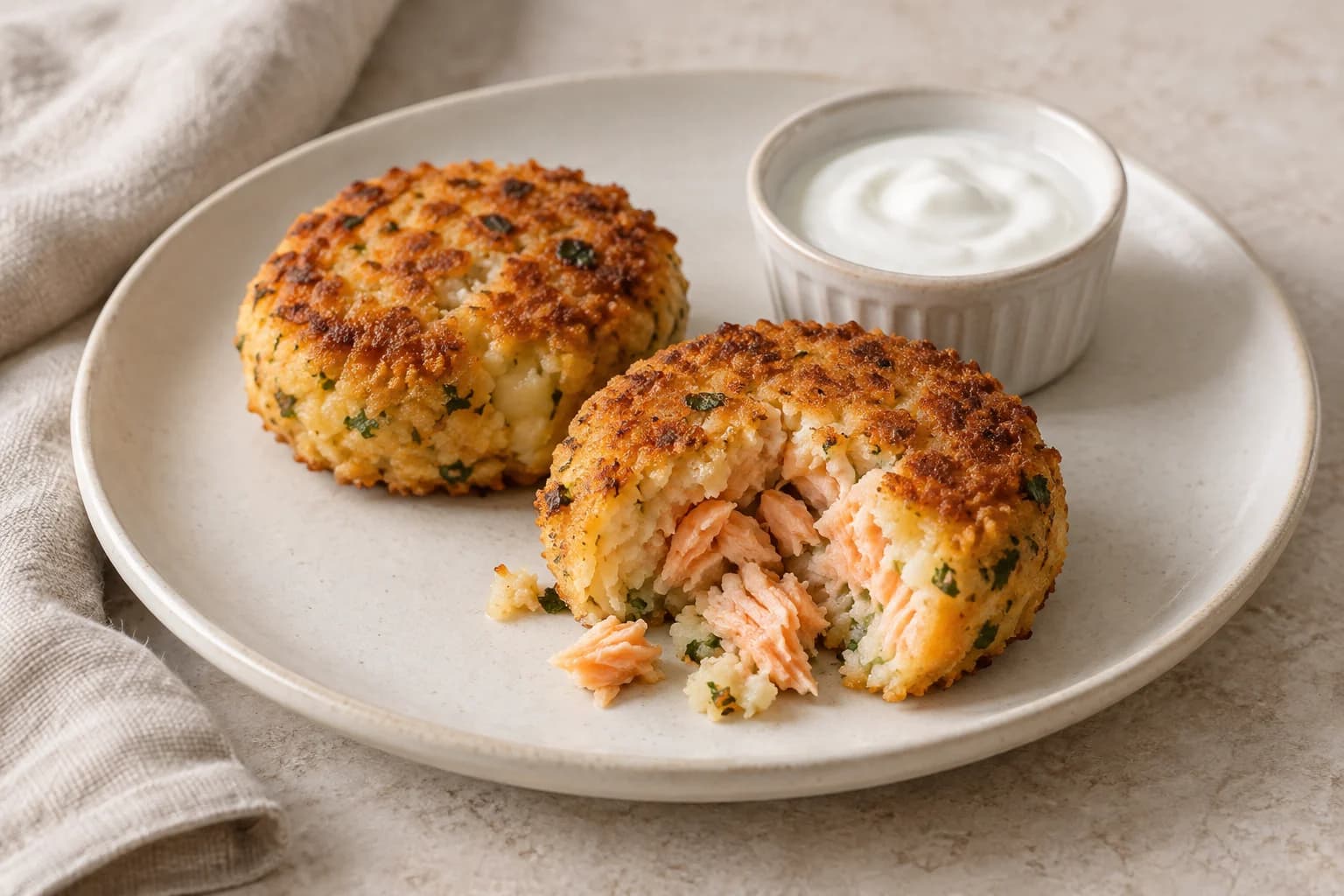
Salmon and potato fishcakes
Small oven-baked fishcakes with a simple yogurt dip. Two fishcakes make one recipe serving.
15 min prep35 min cookingMakes 2

BSc (Hons), PgDip, MSc, RDNutrition review and final publication approved · 2 October 2026
Estimated per recipe serving, including listed accompaniments. Changing the batch size keeps these values the same. Calculation notes
Fibre is not reported for this recipe because ingredient reference data are incomplete. Values vary by brand, product and country; check labels.
Ingredients
Weights are the recipe reference. Household measures are approximate. Ingredients below make 2 servings.
Allergens: Fish, Egg, Wheat, Milk. Check all product labels and cross-contact information; this is not an allergy-free guarantee.
Method
Cook the base
Heat the oven to 200°C / 400°F. Boil the potatoes for 12–15 minutes until tender. Meanwhile, bake the salmon for 12–15 minutes, until it reaches 63°C / 145°F.
Mix
Drain and mash the potatoes. Let the potato and salmon cool for 5 minutes. Check carefully for bones, then flake the salmon into the potato with the egg, breadcrumbs and parsley. Use a clean bowl and utensils for mixing; wash hands after handling the raw egg.
Shape and bake
Shape into four cakes. Brush a baking tray with the oil and set the cakes on it. Bake for 15–18 minutes, turning carefully halfway, until the centres reach 74°C / 165°F.
Serve
Serve two cakes with half the yogurt per serving. Spoon the yogurt on the side rather than coating the cakes.
Serving tips and swaps
The estimate includes the yogurt dip. If you leave it out, the protein and energy will be lower. If higher-fat meals worsen nausea, reflux or fullness, try a smaller portion or another recipe.
Try lactose-free strained yogurt for the dip. Do not assume every dairy-free yogurt has similar nutrition.
Storage and reheating
Cool in shallow containers and refrigerate promptly within two hours, or one hour above 32°C / 90°F. Use within 48 hours (UK FSA guidance), or freeze portions promptly. Thaw in the fridge and use within 24 hours of full defrosting. Reheat only once until steaming hot throughout (74°C / 165°F if using a food thermometer).
About the estimates
Sum reference values for the listed edible ingredient weights, divided by recipe yield. Raw weights unless the ingredient states drained or cooked. No cooking-retention or waste adjustment. All listed oil is counted. Vanilla, cinnamon and cumin are excluded; optional swaps are not included. Brands and portions change the result. Values are estimates. CoFID reproduced under the Open Government Licence v3.0.
Ingredient references and assumptions
- Boneless, skinless salmon flesh, raw: Salmon, farmed, flesh only, raw. UK CoFID 2021, 16-356.
- Peeled potato, cubed: Potatoes, old, raw, flesh only. UK CoFID 2021, 13-489.
- Egg, beaten: Eggs, chicken, whole, raw. UK CoFID 2021, 12-937.
- wholemeal panko breadcrumbs: Kikkoman Whole Wheat Panko. Manufacturer nutrition label.
- Olive oil: Oil, olive. UK CoFID 2021, 17-038.
- Fresh parsley, chopped: Parsley, fresh. UK CoFID 2021, 13-844.
- Plain strained Greek yogurt, 0% fat: FAGE Total 0%, US 16 oz tub. Manufacturer nutrition label.
General food information. Individual needs and tolerance differ. A clinician or registered dietitian can help if you regularly struggle to eat enough.