Recipe guide / 01
Small meals for
low-appetite days.
Start with a recipe you feel able to eat. Choose from soft dishes, small plated meals and a smoothie, with instructions for adjusting the texture and storing leftovers.
Carbohydrate totals are not reported: the ingredient sources use different definitions (CoFID available carbohydrate and US-label total carbohydrate including fibre), which cannot be added consistently. Energy, protein and fat are estimates from the listed weighed ingredients; fibre is shown only where every ingredient has supporting data. These recipes are not suitable for carbohydrate counting.
These recipes have been checked on paper, but have not been kitchen tested. Cooking times are estimates; use the stated doneness checks. Finished weights, texture and portion volumes have not been measured.

BSc (Hons), PgDip, MSc, RDNutrition review and final publication approved · 2 October 2026

Gastroenterology · Sports nutrition
15 pages · 8 recipes · Meal plan and shopping list
Getting started
How to use this guide
Choose by texture and effort
Consider the texture, temperature and preparation time. Soft food will not suit everyone; choose the dishes you prefer.
- Soft dishes: rice pudding, chicken rice pot or silken tofu.
- Plated meals: cottage pie, cod with mash or fishcakes.
- Quick options: a smoothie or safely stored leftovers.
Check the serving size
Servings tell you how much a recipe makes. They are not a daily food target. Refrigerate any uneaten food promptly. If you regularly struggle to eat enough, ask a clinician or dietitian for help rather than keep reducing your meals.
Check substitutions
Use the swaps listed with each recipe. Lactose-free dairy may suit someone with lactose intolerance, but it is not milk-free. These recipes are not a low-FODMAP plan or a prescribed texture-modified diet.
Plan the rest of your food
A smaller meal is one part of a day's food. Include other meals, snacks and drinks, with varied fruit and vegetables, fibre-containing carbohydrates and sources of unsaturated fat as appetite allows. A protein-rich dish by itself is not a muscle-preservation programme.
Support your muscles
Adequate protein alongside regular, progressive resistance exercise can support muscle strength and function during weight loss. Where appropriate, try weights, resistance bands or bodyweight exercises; discuss suitable activity with your healthcare professional.
Include fibre and fluids
Include fruit, vegetables, oats or wholegrains, beans or lentils, nuts and seeds as tolerated. Increase fibre gradually, especially with bloating or constipation. Drink regularly; small frequent sips may be easier with nausea. Follow any prescribed fluid restriction rather than a universal fluid target.
Adjust for digestive symptoms
For nausea, reflux or uncomfortable fullness, try smaller, more frequent meals, eat slowly and stop when comfortably full. Lower-fat choices may help if fatty foods worsen symptoms. Adjust fibre to tolerance with bloating, constipation or diarrhoea. With diarrhoea or vomiting, pay particular attention to fluids and seek advice if symptoms persist or affect eating or drinking.
Know when to get support
Speak to your healthcare professional or dietitian if you consistently eat substantially less than usual, cannot meet your nutritional needs, lose weight rapidly or unintentionally, or have persistent digestive symptoms. Seek urgent medical advice if you cannot keep fluids down. A dietitian can assess whether your food intake meets your nutritional needs.
Prepare and store food safely
Keep raw meat, poultry, fish and eggs separate from ready-to-eat food; wash hands, utensils and surfaces after handling them. Use a fridge thermometer and keep the fridge at 4°C / 40°F or below. Cool cooked food in small, shallow portions and refrigerate promptly, within two hours (one hour above 32°C / 90°F). Label containers with the date.
Use leftovers promptly
This guide uses the UK FSA limit of 48 hours for cooked leftovers; rice has a shorter limit. Chill rice within one hour, use within 24 hours and reheat only once. Freeze extra portions promptly. Thaw in the fridge and use within 24 hours of full defrosting. Reheat once until steaming hot throughout (74°C / 165°F if using a food thermometer). Storage recommendations vary by country; follow stricter local or product instructions.
Understand the evidence and estimates
These nutritional strategies draw mainly on wider evidence and expert guidance for incretin-based weight-management therapies. Direct research testing dietary strategies during retatrutide treatment remains limited. Nutrition values are estimates and vary by brand, product and country; check labels. Grams remain the primary measurement.
The recipes
The eight recipes
Open a recipe for the ingredients and method. Each also has its own page.
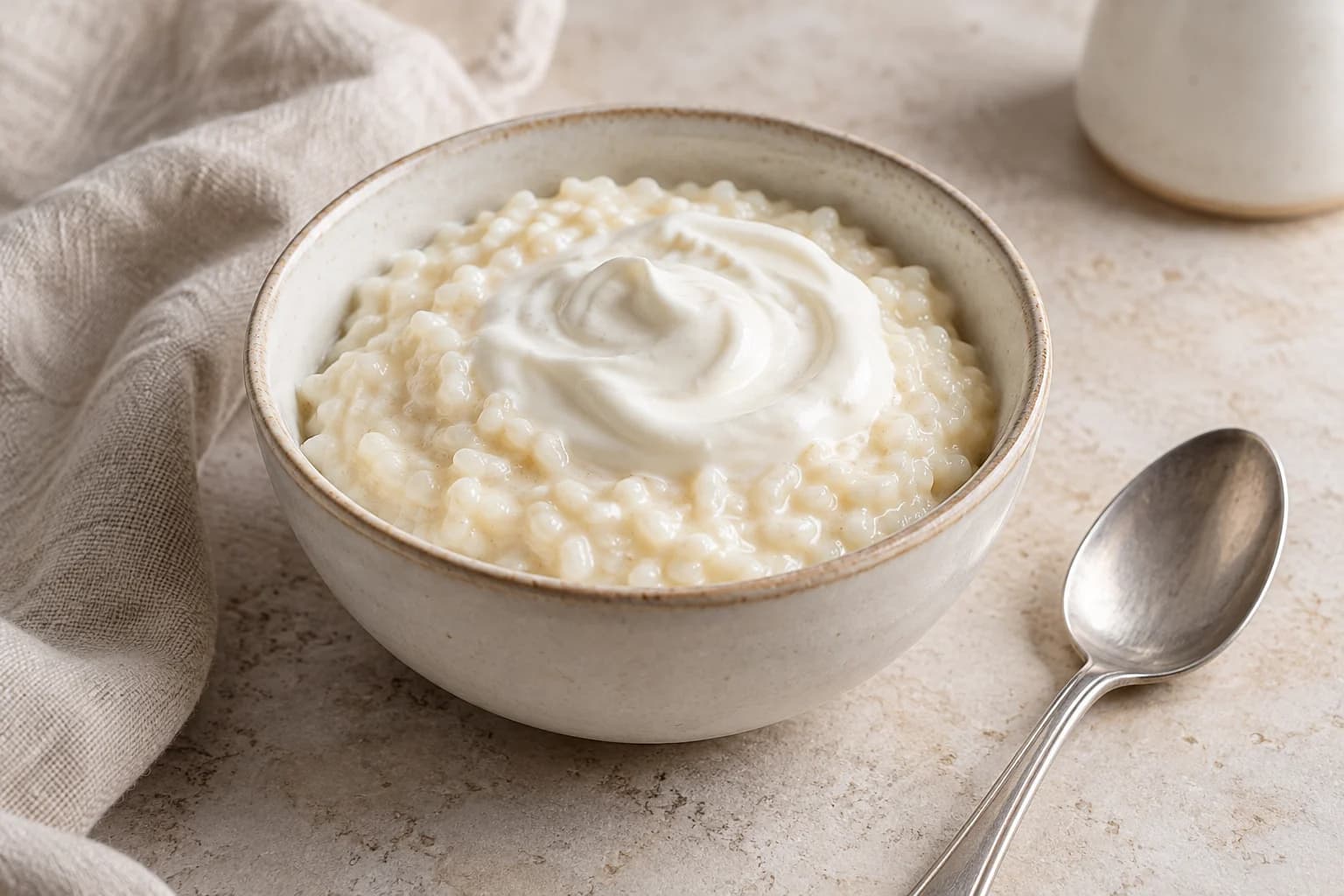
01 · Breakfast
Vanilla rice pudding with Greek yogurt
35 min · Makes 2
01 · Breakfast
Vanilla rice pudding with Greek yogurt
35 min · Makes 2
A creamy rice breakfast with a cool yogurt swirl. Make two portions and keep one for tomorrow.
Open the recipe pageEstimated per recipe serving, including listed accompaniments. Changing the batch size keeps these values the same. Calculation notes
Fibre is not reported for this recipe because ingredient reference data are incomplete. Values vary by brand, product and country; check labels.
Ingredients
Weights are the recipe reference. Household measures are approximate. Ingredients below make 2 servings.
Allergens: Milk. Check all product labels and cross-contact information; this is not an allergy-free guarantee.
Method
Start the rice
Put the rice, milk, water and vanilla in a small heavy saucepan. Bring just to a simmer, stirring.
Cook gently
Turn the heat low and cook for 25–30 minutes, stirring often, until the rice is tender. Add a splash of water if the pan becomes dry before the rice is cooked.
Add the yogurt
Let the rice cool for 5 minutes. Divide between two bowls and spoon half the yogurt over each. Stir in or leave as a swirl.
Save a portion
If keeping one, transfer it promptly to a shallow covered container and refrigerate within one hour. Eat within 24 hours.
Serving tips and swaps
This recipe makes two portions. If you eat less, refrigerate the rest promptly.
Lactose-free milk and lactose-free strained yogurt can be used; check their protein content because products differ.
Storage and reheating
Cool in shallow containers and refrigerate within one hour. Use refrigerated rice within 24 hours. Reheat only once until steaming hot throughout (74°C / 165°F if using a food thermometer). Freeze promptly if you will not use the second portion tomorrow. Thaw in the fridge and use within 24 hours of full defrosting.
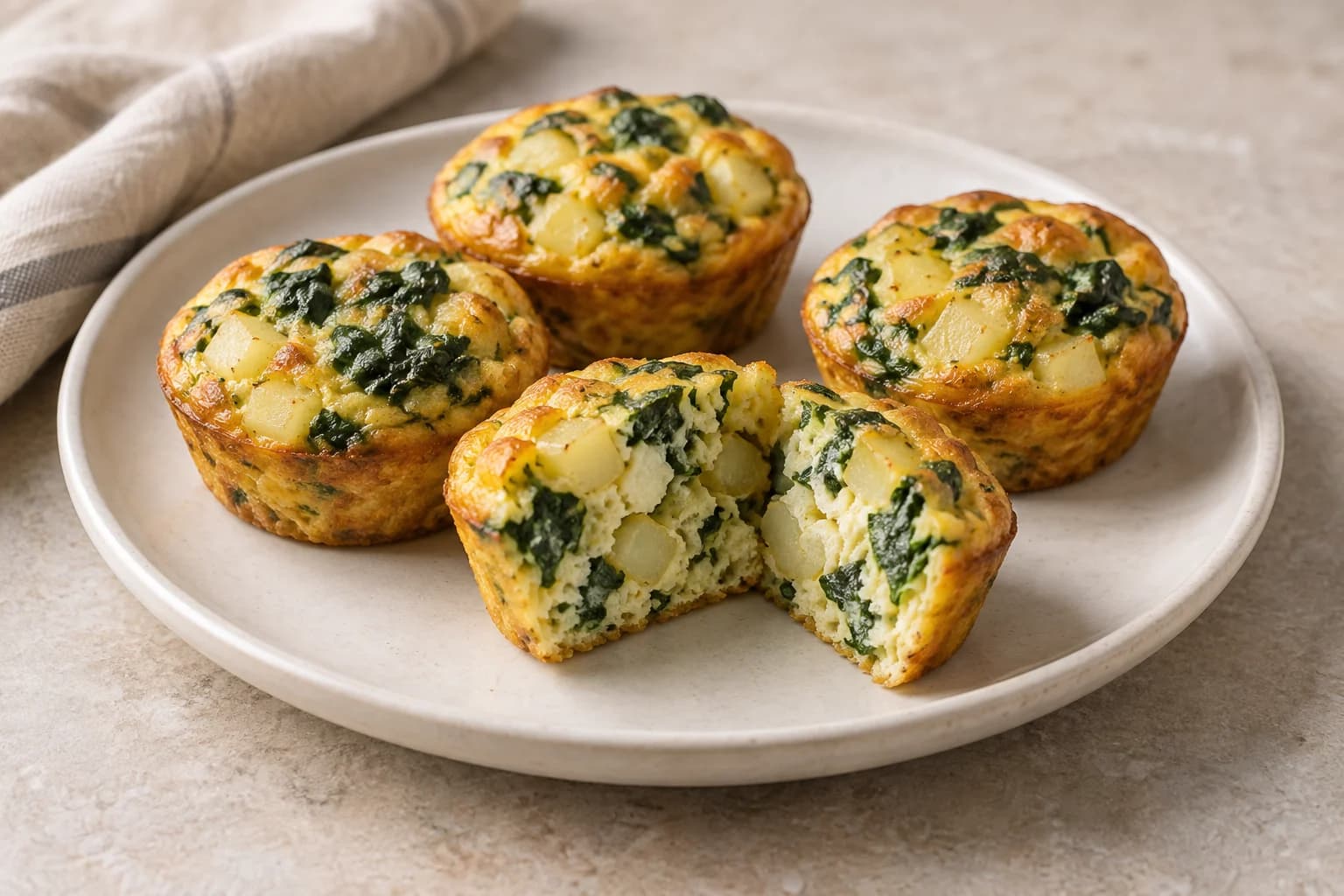
02 · Breakfast
Mini egg, potato and spinach bakes
40 min · Makes 2
02 · Breakfast
Mini egg, potato and spinach bakes
40 min · Makes 2
Egg, potato and spinach baked in a muffin tin. Makes six bakes, with three per serving.
Open the recipe pageEstimated per recipe serving, including listed accompaniments. Changing the batch size keeps these values the same. Calculation notes
Estimated fibre per recipe serving: 2.3 g. Values vary by brand, product and country; check labels.
Ingredients
Weights are the recipe reference. Household measures are approximate. Ingredients below make 2 servings.
Allergens: Egg, Milk. Check all product labels and cross-contact information; this is not an allergy-free guarantee.
Method
Soften the potato
Heat the oven to 190°C / 375°F. Boil the potato pieces for 8–10 minutes until tender, then drain well. Wilt the spinach in the warm pan and squeeze out excess moisture.
Fill the tin
Brush six muffin wells, each at least 100 ml capacity, with the oil. Beat the eggs with the milk, then fold in the potato and spinach. Divide evenly between the six wells, leaving space below each rim.
Bake
Bake for 18–22 minutes until set, with an internal temperature of at least 71°C / 160°F. Rest for 5 minutes before loosening the edges.
Serve
Serve three bakes per recipe serving. Add toast or another accompaniment if you need more; it is not included in the nutrition estimate.
Serving tips and swaps
Portion by the number of bakes. One bake is one-third of the stated serving, not a full breakfast.
Use the same amount of lactose-free milk if preferred. Keep the egg amount unchanged.
Storage and reheating
Cool in shallow containers and refrigerate promptly within two hours, or one hour above 32°C / 90°F. Use within 48 hours (UK FSA guidance), or freeze portions promptly. Thaw in the fridge and use within 24 hours of full defrosting. Reheat only once until steaming hot throughout (74°C / 165°F if using a food thermometer).
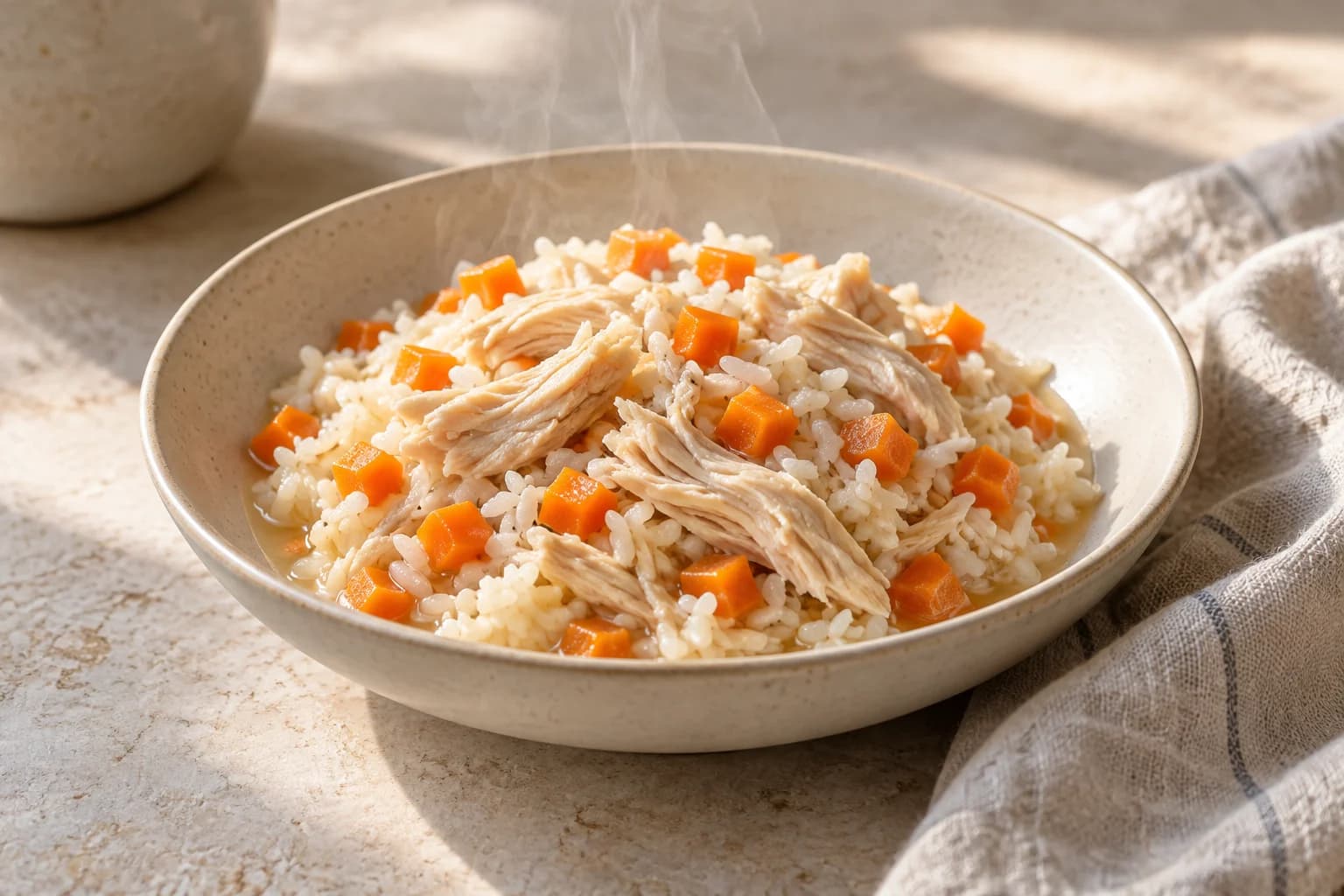
03 · Lunch
Chicken and carrot rice pot
35 min · Makes 2
03 · Lunch
Chicken and carrot rice pot
35 min · Makes 2
Tender chicken, soft carrot and rice in one pot. Add water for a looser texture.
Open the recipe pageEstimated per recipe serving, including listed accompaniments. Changing the batch size keeps these values the same. Calculation notes
Estimated fibre per recipe serving: 2.9 g. Values vary by brand, product and country; check labels.
Ingredients
Weights are the recipe reference. Household measures are approximate. Ingredients below make 2 servings.
Allergens: No major allergens identified in the listed base ingredients. Check all product labels and cross-contact information; this is not an allergy-free guarantee.
Method
Start the pot
Heat the oil in a lidded saucepan. Add the carrot and stir over medium-low heat for 3 minutes. Add the rice and water.
Cook with the chicken
Lay the chicken on top. Bring to a gentle boil, cover and simmer on low for 18–22 minutes, until the rice and carrot are soft and the thickest part of the chicken reaches 74°C / 165°F. If the chicken has not reached this temperature, continue cooking and add hot water if needed to prevent the rice drying out.
Shred and stir
Remove the chicken to a clean plate and shred it with two forks. Return it to the rice. Add a little hot water for a looser consistency, or simmer uncovered briefly if too wet.
Divide
Divide the chicken and rice evenly between two bowls. Refrigerate any saved portion within one hour and eat within 24 hours.
Serving tips and swaps
Adding water changes consistency, not the amount of chicken or rice in a portion.
The base recipe uses water. Stock changes sodium and may contain allergens; check the label if you use it.
Storage and reheating
Cool in shallow containers and refrigerate within one hour. Use refrigerated rice within 24 hours. Reheat only once until steaming hot throughout (74°C / 165°F if using a food thermometer). Freeze promptly if you will not use the second portion tomorrow. Thaw in the fridge and use within 24 hours of full defrosting.
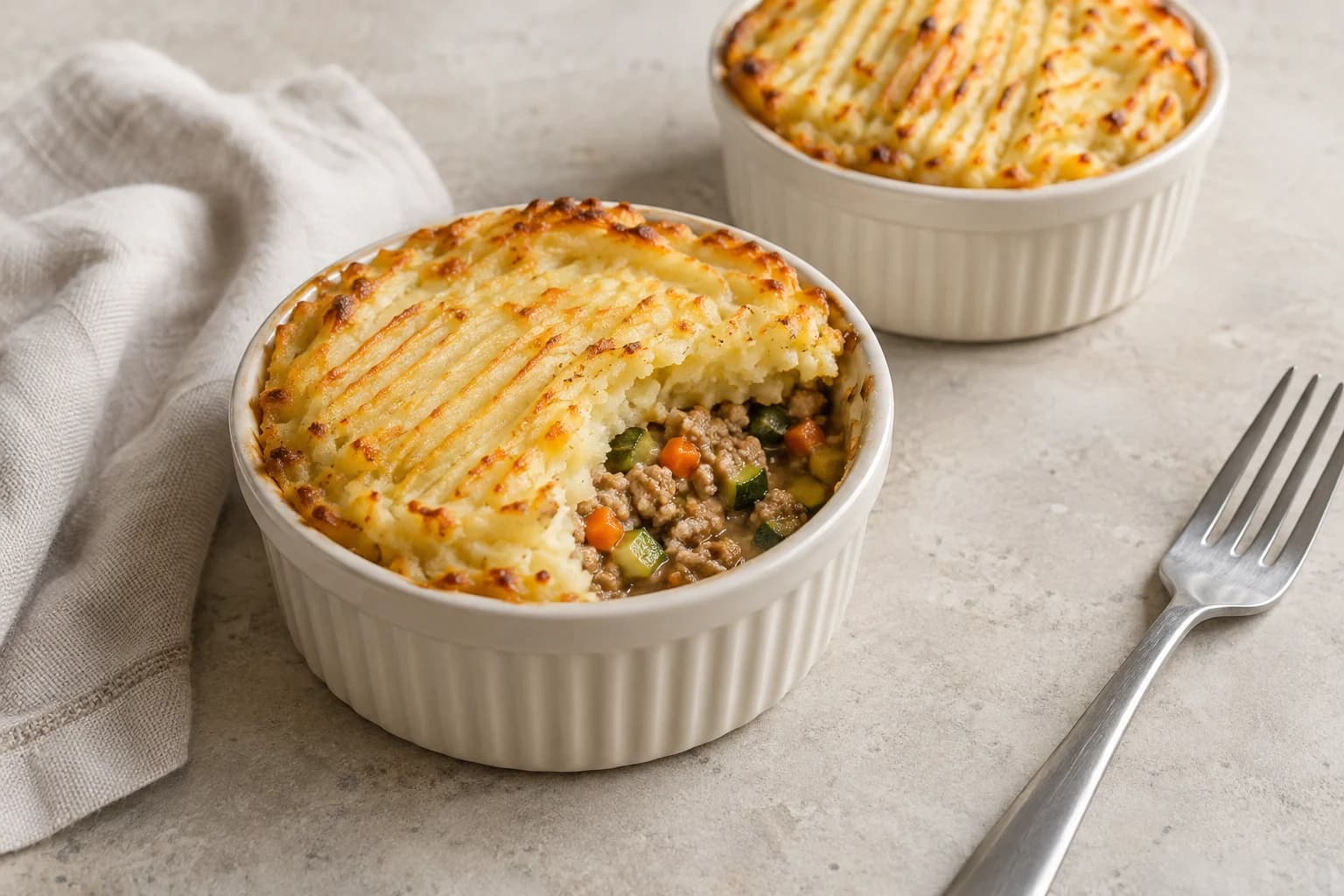
04 · Dinner
Turkey cottage pie pots
55 min · Makes 4
04 · Dinner
Turkey cottage pie pots
55 min · Makes 4
A golden potato top and a soft turkey-and-vegetable filling, baked in individual dishes.
Open the recipe pageEstimated per recipe serving, including listed accompaniments. Changing the batch size keeps these values the same. Calculation notes
Estimated fibre per recipe serving: 4.8 g. Values vary by brand, product and country; check labels.
Ingredients
Weights are the recipe reference. Household measures are approximate. Ingredients below make 4 servings.
Allergens: Wheat, Milk. Check all product labels and cross-contact information; this is not an allergy-free guarantee.
Method
Make the mash
Heat the oven to 200°C / 400°F. Boil the potatoes for 15–18 minutes until tender. Drain and mash with the milk.
Cook the filling
Meanwhile, heat the oil in a pan. Add the turkey and break it up with a spoon. Cook for 5 minutes, then add the carrot and courgette and cook for 5 minutes more.
Thicken
Stir in the flour, then the water. Simmer for 8–10 minutes, stirring, until the vegetables are tender and the filling is moist but not watery.
Bake the pots
Divide the filling between four 500 ml ovenproof dishes. Leave space below each rim. Top with mash and roughen with a fork. Bake for 15–20 minutes until lightly golden and the centre reaches 74°C / 165°F.
Serving tips and swaps
Each pot is one recipe serving. You can serve part and refrigerate the rest promptly; review your whole day's intake rather than routinely shrinking every meal.
Use lactose-free milk in the mash if needed.
Storage and reheating
Cool in shallow containers and refrigerate promptly within two hours, or one hour above 32°C / 90°F. Use within 48 hours (UK FSA guidance), or freeze portions promptly. Thaw in the fridge and use within 24 hours of full defrosting. Reheat only once until steaming hot throughout (74°C / 165°F if using a food thermometer).
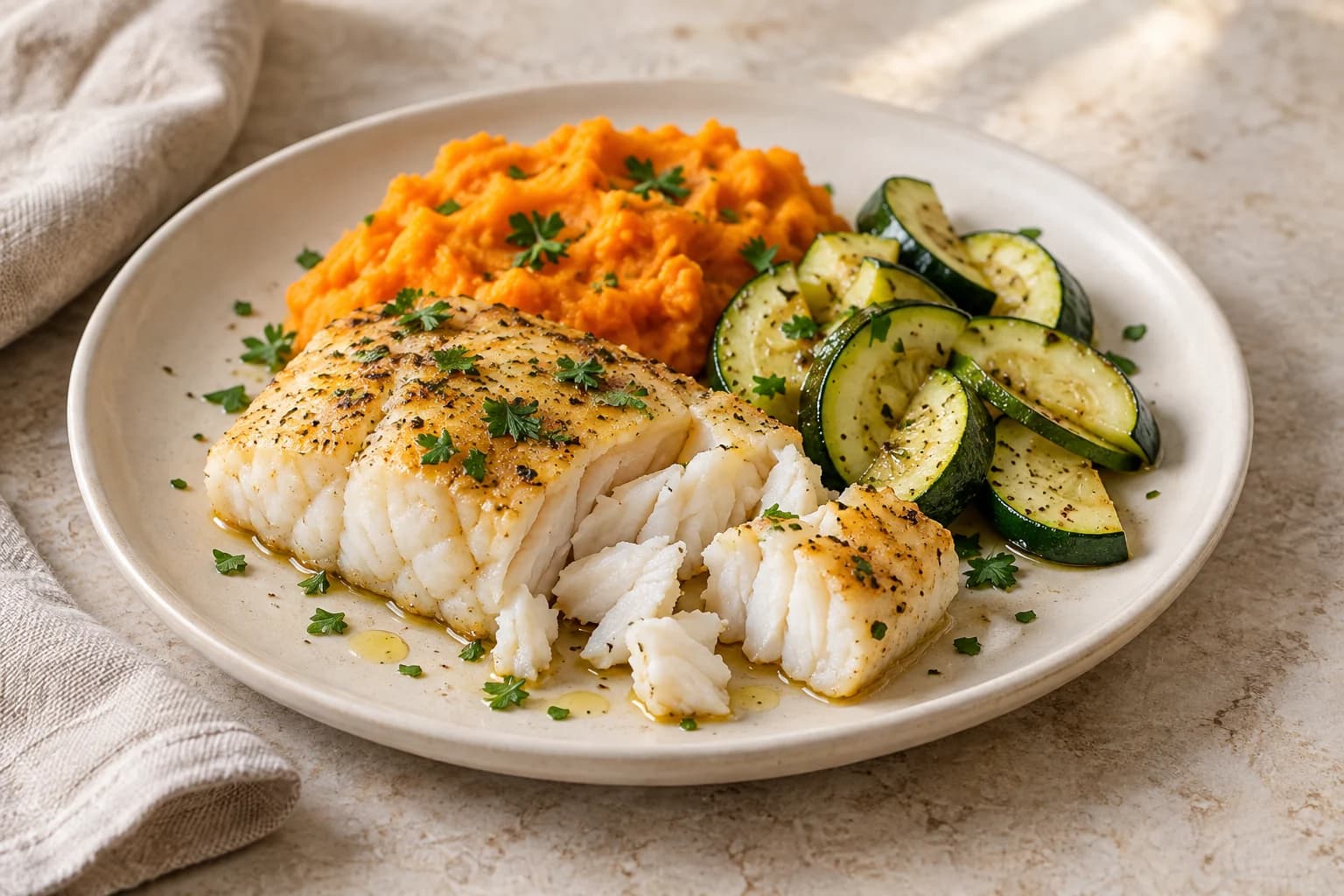
05 · Dinner
Herb-baked cod with sweet-potato mash
35 min · Makes 2
05 · Dinner
Herb-baked cod with sweet-potato mash
35 min · Makes 2
Flaky cod with sweet-potato mash and tender courgette.
Open the recipe pageEstimated per recipe serving, including listed accompaniments. Changing the batch size keeps these values the same. Calculation notes
Fibre is not reported for this recipe because ingredient reference data are incomplete. Values vary by brand, product and country; check labels.
Ingredients
Weights are the recipe reference. Household measures are approximate. Ingredients below make 2 servings.
Allergens: Fish, Milk. Check all product labels and cross-contact information; this is not an allergy-free guarantee.
Method
Cook the sweet potato
Heat the oven to 190°C / 375°F. Boil the sweet potato for 12–15 minutes until tender.
Bake the cod
Put the cod in a small ovenproof dish, brush with half the oil and scatter over the parsley. Bake for 12–16 minutes, until the fish reaches 63°C / 145°F and flakes easily.
Soften the courgette
Heat the remaining oil in a pan. Add the courgette and a splash of water, cover and cook for 6–8 minutes until tender.
Finish the mash
Drain the sweet potato and mash with the milk. Divide the fish, mash and courgette between two plates, checking carefully for bones.
Serving tips and swaps
Serve the fish, mash and courgette separately if you prefer.
Frozen cod can be used after thawing in the fridge. Use lactose-free milk in the mash if preferred.
Storage and reheating
Cool in shallow containers and refrigerate promptly within two hours, or one hour above 32°C / 90°F. Use within 48 hours (UK FSA guidance), or freeze portions promptly. Thaw in the fridge and use within 24 hours of full defrosting. Reheat only once until steaming hot throughout (74°C / 165°F if using a food thermometer).
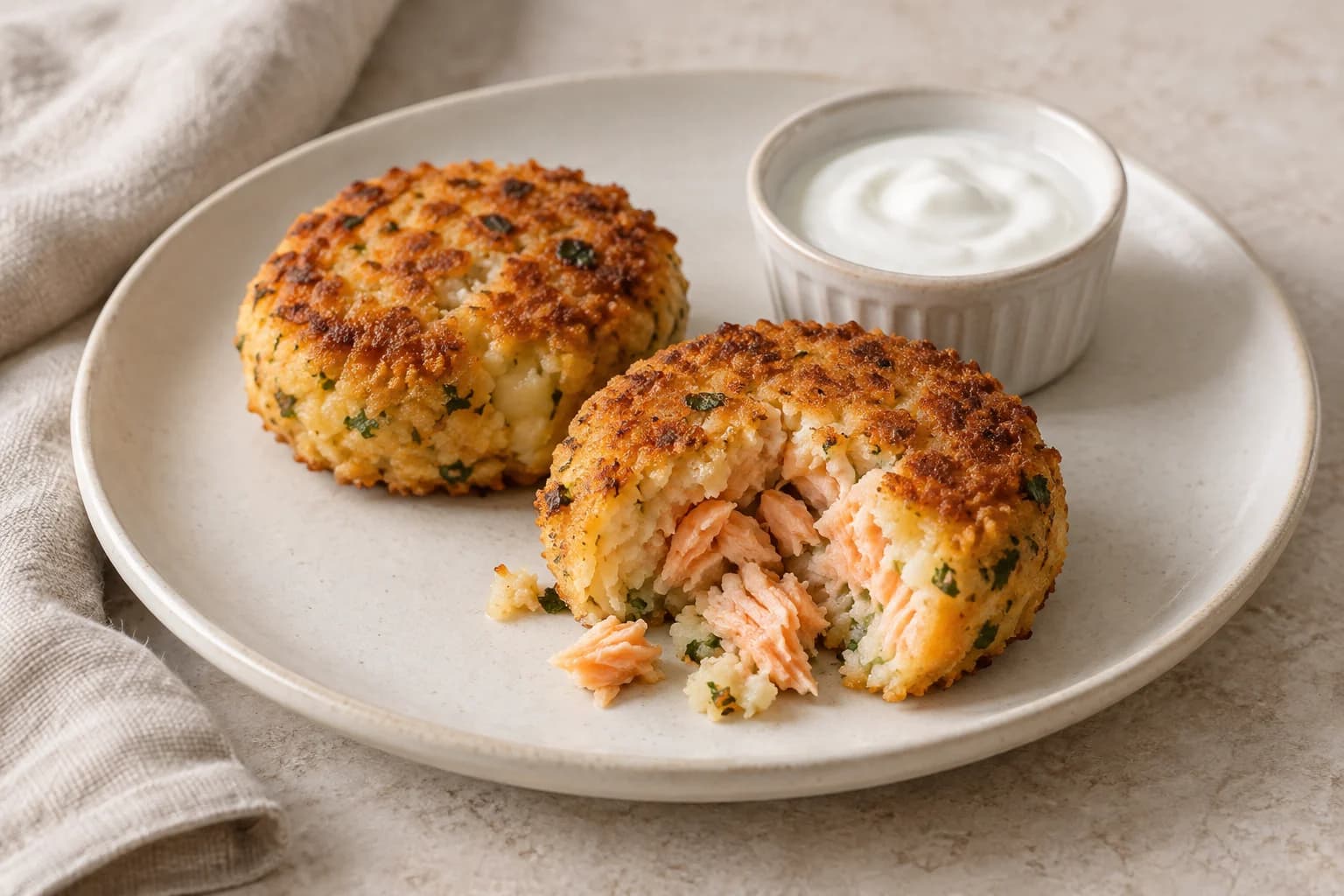
06 · Lunch
Salmon and potato fishcakes
50 min · Makes 2
06 · Lunch
Salmon and potato fishcakes
50 min · Makes 2
Small oven-baked fishcakes with a simple yogurt dip. Two fishcakes make one recipe serving.
Open the recipe pageEstimated per recipe serving, including listed accompaniments. Changing the batch size keeps these values the same. Calculation notes
Fibre is not reported for this recipe because ingredient reference data are incomplete. Values vary by brand, product and country; check labels.
Ingredients
Weights are the recipe reference. Household measures are approximate. Ingredients below make 2 servings.
Allergens: Fish, Egg, Wheat, Milk. Check all product labels and cross-contact information; this is not an allergy-free guarantee.
Method
Cook the base
Heat the oven to 200°C / 400°F. Boil the potatoes for 12–15 minutes until tender. Meanwhile, bake the salmon for 12–15 minutes, until it reaches 63°C / 145°F.
Mix
Drain and mash the potatoes. Let the potato and salmon cool for 5 minutes. Check carefully for bones, then flake the salmon into the potato with the egg, breadcrumbs and parsley. Use a clean bowl and utensils for mixing; wash hands after handling the raw egg.
Shape and bake
Shape into four cakes. Brush a baking tray with the oil and set the cakes on it. Bake for 15–18 minutes, turning carefully halfway, until the centres reach 74°C / 165°F.
Serve
Serve two cakes with half the yogurt per serving. Spoon the yogurt on the side rather than coating the cakes.
Serving tips and swaps
The estimate includes the yogurt dip. If you leave it out, the protein and energy will be lower. If higher-fat meals worsen nausea, reflux or fullness, try a smaller portion or another recipe.
Try lactose-free strained yogurt for the dip. Do not assume every dairy-free yogurt has similar nutrition.
Storage and reheating
Cool in shallow containers and refrigerate promptly within two hours, or one hour above 32°C / 90°F. Use within 48 hours (UK FSA guidance), or freeze portions promptly. Thaw in the fridge and use within 24 hours of full defrosting. Reheat only once until steaming hot throughout (74°C / 165°F if using a food thermometer).
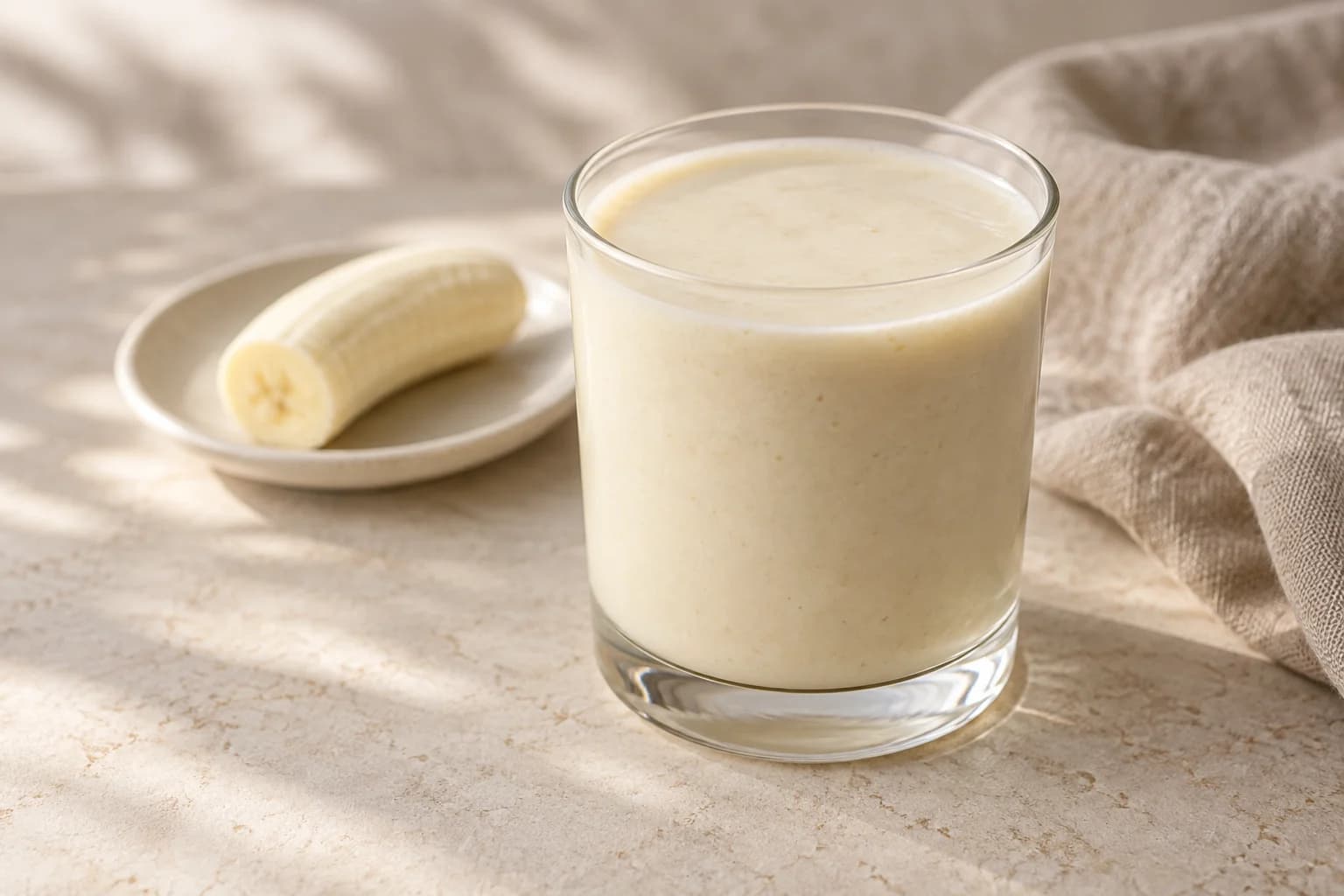
07 · Snack
Banana, milk and yogurt smoothie
5 min · Makes 1
07 · Snack
Banana, milk and yogurt smoothie
5 min · Makes 1
A banana smoothie made with milk and Greek yogurt.
Open the recipe pageEstimated per recipe serving, including listed accompaniments. Changing the batch size keeps these values the same. Calculation notes
Estimated fibre per recipe serving: 1.1 g. Values vary by brand, product and country; check labels.
Ingredients
Weights are the recipe reference. Household measures are approximate. Ingredients below make 1 serving.
Allergens: Milk. Check all product labels and cross-contact information; this is not an allergy-free guarantee.
Method
Blend
Put the banana, milk and yogurt in a blender. Blend until smooth, scraping down the sides if needed.
Adjust
If too thick, blend in cold water a tablespoon at a time. Added water changes volume but not the batch's nutrition.
Serve
Pour into a glass and drink slowly. Refrigerate any remainder immediately in a clean covered container and use the same day.
Serving tips and swaps
Use this as a snack or one part of your day. It is not a nutritionally complete meal replacement.
Lactose-free milk and strained yogurt are options. Plant-based versions differ substantially in protein, so their nutrition needs recalculation.
Storage and reheating
Best freshly made. Refrigerate any remainder immediately in a clean covered container and use the same day. Keep chilled at 4°C / 40°F or below.
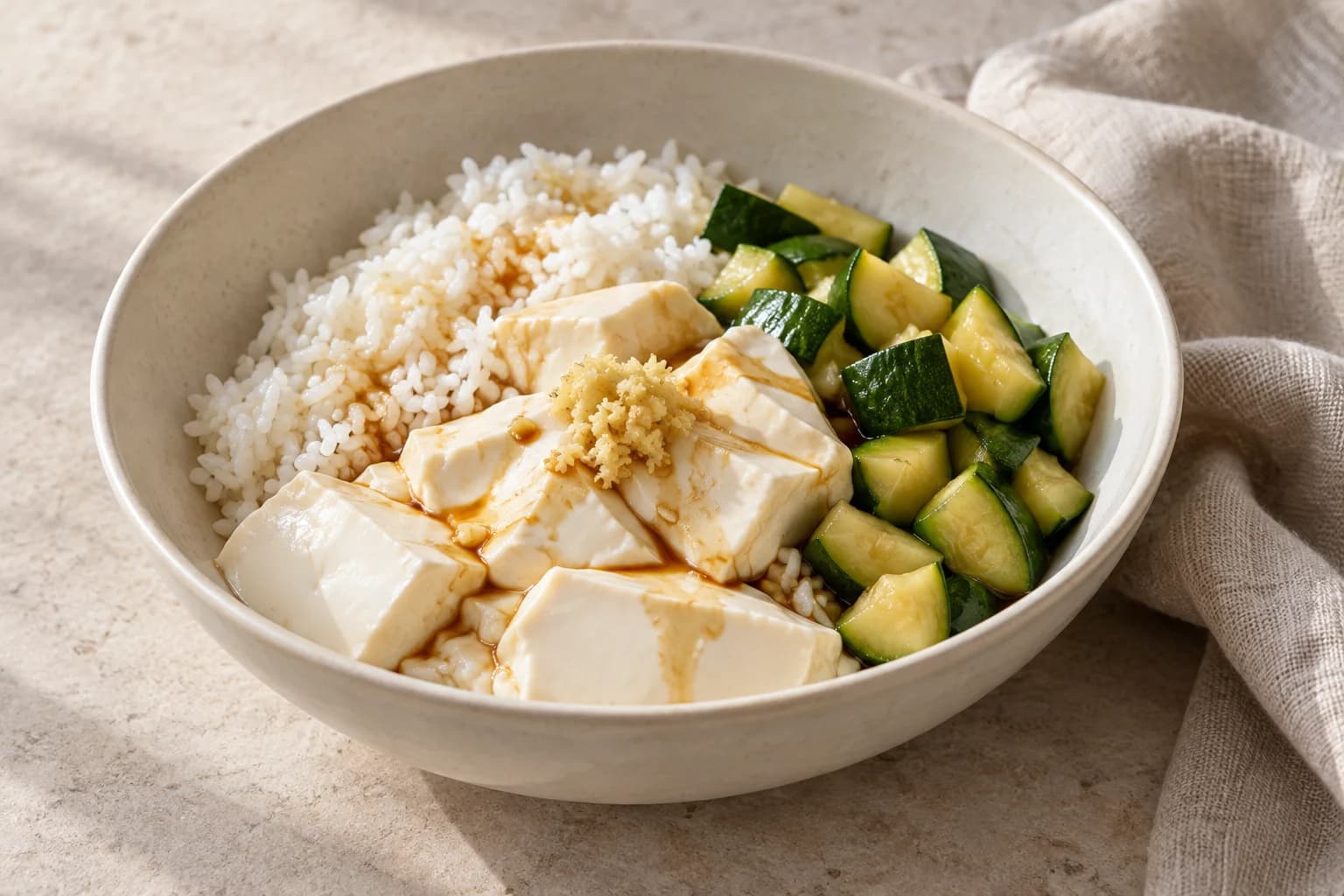
08 · Dinner
Silken tofu with warm rice and courgette
30 min · Makes 2
08 · Dinner
Silken tofu with warm rice and courgette
30 min · Makes 2
Soft tofu and rice with gently cooked courgette and a little ginger-soy seasoning.
Open the recipe pageEstimated per recipe serving, including listed accompaniments. Changing the batch size keeps these values the same. Calculation notes
Fibre is not reported for this recipe because ingredient reference data are incomplete. Values vary by brand, product and country; check labels.
Ingredients
Weights are the recipe reference. Household measures are approximate. Ingredients below make 2 servings.
Allergens: Soy, Wheat. Check all product labels and cross-contact information; this is not an allergy-free guarantee.
Method
Cook the rice
Rinse the rice. Cook it with the measured water in a covered saucepan, following the rice packet's cooking time; add water if required.
Cook the courgette
Heat the oil in a pan. Add the courgette and ginger and stir for 2 minutes. Add 2 tablespoons of water, cover and cook for 5–7 minutes until tender.
Warm the tofu
Slide large spoonfuls of tofu into the pan. Drizzle over the soy sauce. Cover and heat gently for 4–5 minutes, following the tofu packet's heating instructions, without vigorous stirring. Continue heating until hot throughout; the packet instructions take priority over the estimated time.
Assemble
Divide the rice, tofu and courgette evenly between two bowls. Chill any saved rice portion within one hour and use within 24 hours.
Serving tips and swaps
Use a spoon to portion the soft tofu without breaking it up. Keep it separate from the rice and courgette if you prefer.
Silken and firm tofu are not nutritionally interchangeable. Check the actual product when changing the tofu type.
Storage and reheating
Cool in shallow containers and refrigerate within one hour. Use refrigerated rice within 24 hours. Reheat only once until steaming hot throughout (74°C / 165°F if using a food thermometer). Freeze promptly if you will not use the second portion tomorrow. Thaw in the fridge and use within 24 hours of full defrosting.
Meal plan
Four days of lunches and dinners
Lunches and dinners for one person. The stated servings provide approximately 660 kcal on days 1–2 and 768 kcal on days 3–4 in total for lunch plus dinner, not a daily intake target. The guide includes two breakfast recipes and a smoothie.
Important: lunch and dinner only. This is not a complete day’s diet and does not supply all the energy and nutrients you need. Add breakfast, snacks and other food to meet your needs. If you regularly struggle to eat enough, lose weight faster than intended or have persistent digestive symptoms, speak to your healthcare professional or dietitian.
Day 1
Dinner
Make both batches. Refrigerate tomorrow's portions; freeze the extra two pie pots promptly.
Day 2
Dinner
Eat the rice within 24 hours. Reheat each saved portion only once.
Day 3
Cook two portions of each. Refrigerate the second portions promptly.
Day 4
Use the saved portions. Choose silken tofu on another day if you want a plant-based option.
Before you shop
Shopping list
This list makes one full batch of all eight recipes. It includes more food than the four-day lunch and dinner plan. Choose the recipes you need, or freeze extra portions promptly.
0 of 23 checked
Quantities are edible or drained weights, before cooking unless stated. Buy enough to allow for skins, seeds and can liquid. Water is omitted. Checks last while this page is open.
Using this guide
The stated servings describe the recipe yield, not your daily requirements. Add meals, snacks and drinks to meet your needs. Weights are the reference; household measures are approximate. Ingredient weights are raw or drained unless stated. Oven temperatures are conventional, not fan. Check doneness rather than relying only on the clock.
About the estimates
Sum reference values for the listed edible ingredient weights, divided by recipe yield. Raw weights unless the ingredient states drained or cooked. No cooking-retention or waste adjustment. All listed oil is counted. Vanilla, cinnamon and cumin are excluded; optional swaps are not included. Brands and portions change the result. Values are estimates. CoFID reproduced under the Open Government Licence v3.0.
General information, not a personalised diet or treatment plan. Seek individual advice if you regularly struggle to eat enough. Check every product label for allergens and cross-contact information. Ingredient references are listed on each recipe page and in the PDF.