Editorially reviewed · Last updated October 2, 2026 · How we review
Part of How-To Guides.
Key findings
- Hit a protein floor first — roughly 80–120 g/day for most adults, or ~1.5 g per kg lean mass when you know it — with shakes and mechanical eating when solid food fails.
- Shot day (and the day after): soft, low-fat, small plates; skip fried food, huge volumes, and raw fiber piles.
- Ramp fiber with water — dumping salad or full-dose psyllium into a slowed gut is the constipation trap (fiber paradox).
- Please eat: class research shows average intakes near 750 kcal and ~33 g protein; chronic under-eating costs muscle, hair, and energy.
- The research covers food intake with GLP-1 treatment, glucagon and carbohydrates, and micronutrient gaps.
What to Eat on Retatrutide When Appetite Is Low
When appetite is low, getting enough protein and other nutrients can be difficult, especially around injection day.
This guide covers protein, food for injection days, groceries, fiber, alcohol, eating out, and signs of under-eating, with links to the supporting research.
Build the plate in order
Three parts. Start with protein.
- 01
One protein
Fish, eggs or dairy
- 02
Soft carbs
Rice, oats or banana
- 03
Cooked veg
A little, as tolerated
A rough guide to plate space, not a macro ratio or an amount you have to finish.
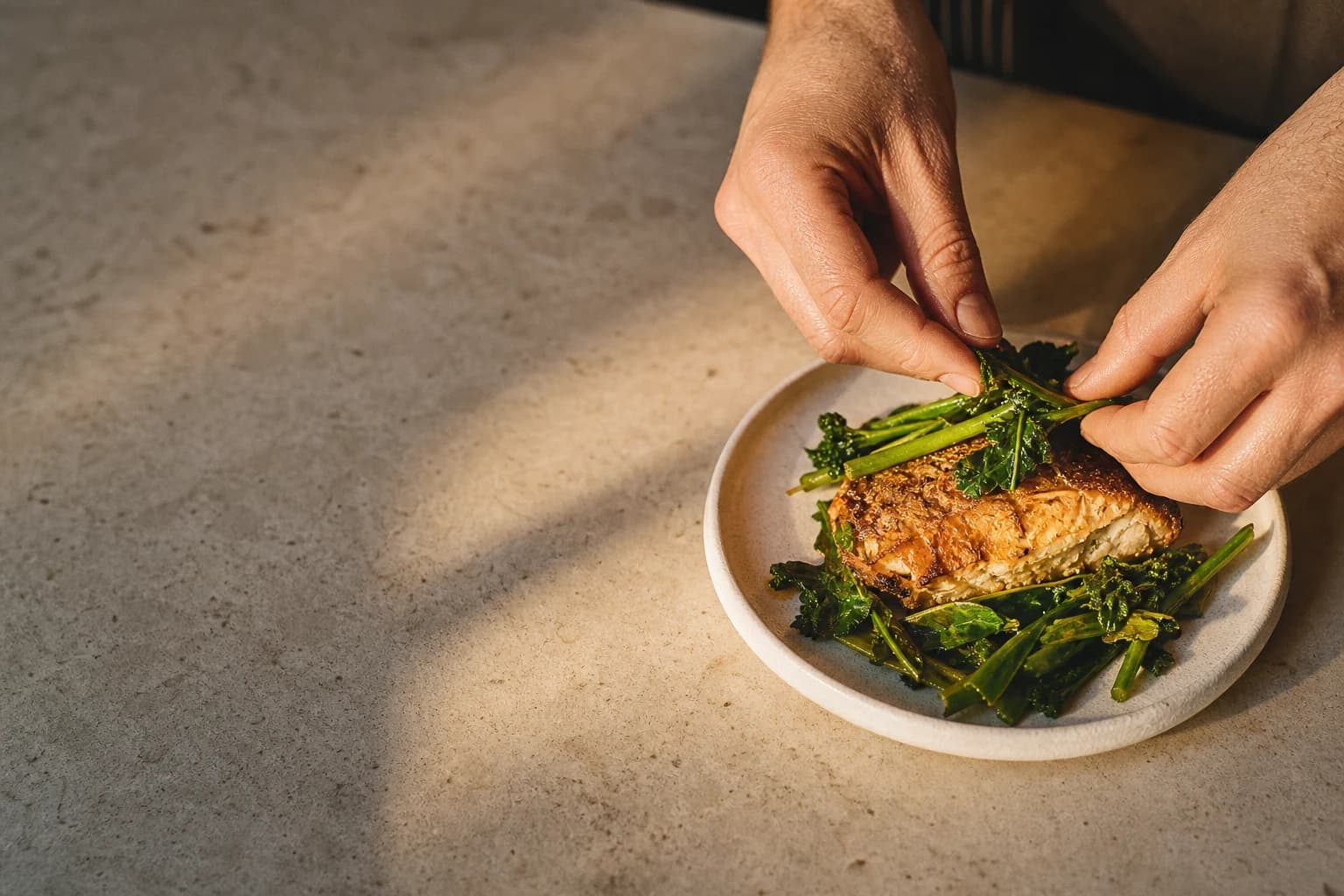
Plate example: salmon, rice and cooked vegetables.
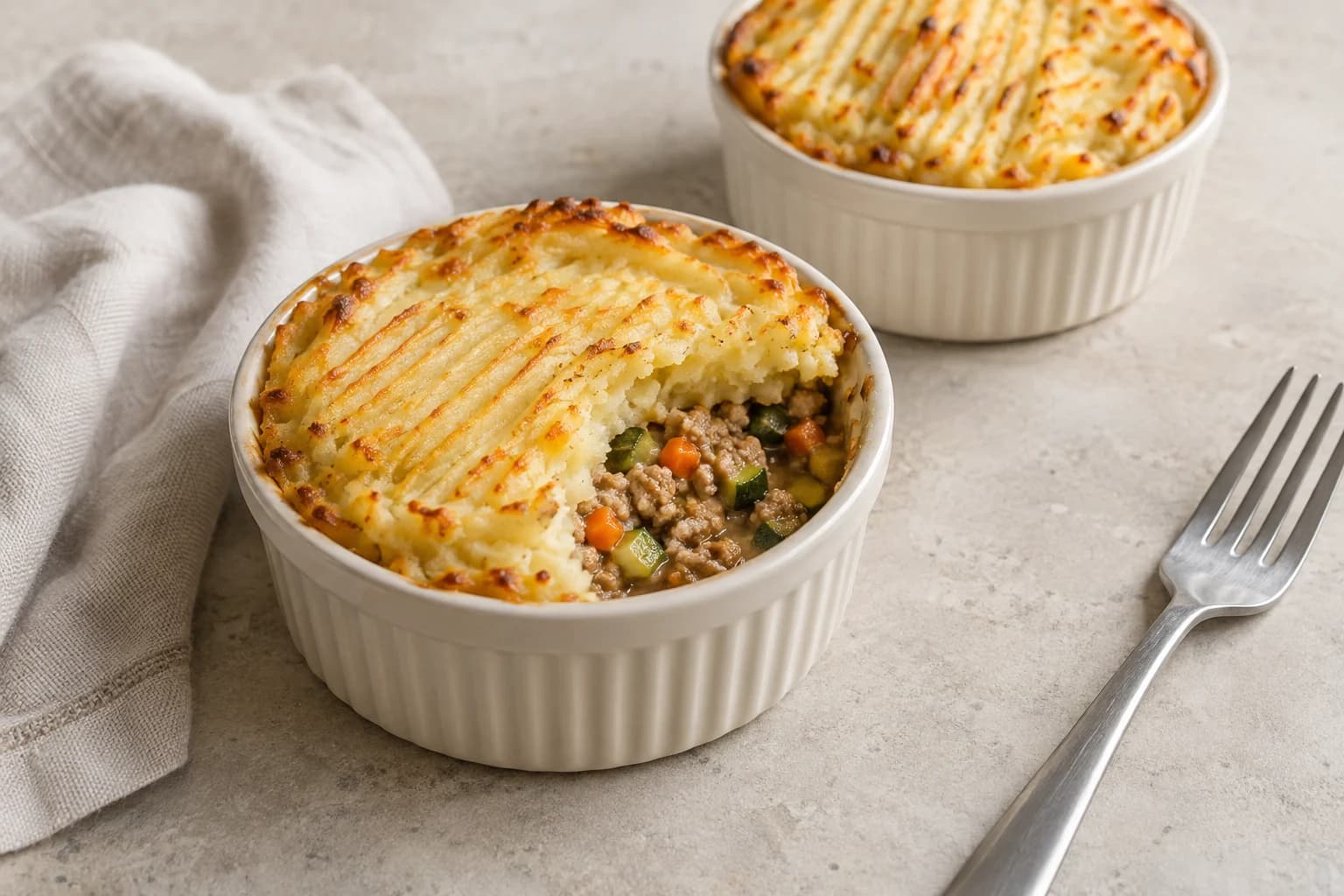
Recipes for low-appetite days
Eight recipes, with practical guidance, a meal plan and a shopping list. Read the guide online or download its PDF.
Protein when you can't eat
Getting enough protein can be difficult when appetite is suppressed and gastric emptying is slow.
Protein targets
A 2025 joint advisory from the American College of Lifestyle Medicine, the American Society for Nutrition, the Obesity Medicine Association, and The Obesity Society gives GLP-1 users a clear protein frame:
- Best target: about 1.5 g protein per kg of lean body mass per day
- If you don’t know lean mass: 80–120 g protein per day for most adults
- During active weight loss: about 1.2–1.6 g per kg body weight (use adjusted body weight at higher BMIs so total weight does not overstate need)
- Floor you should not live under: roughly 0.4–0.5 g/kg/day
- Protein alone is not enough — the same advisory pairs this with resistance training at least three times per week (plus weekly aerobic activity)
Your protein target
Enter your weight to estimate a daily protein target based on the 2025 joint advisory for people on GLP-1 therapy.
1.6 g × 83.9 kg adjusted body weight = 134 g
Lean mass unknown — using current weight as the adjusted-body-weight estimate (1.2–1.6 g/kg during active loss). Most adults also land near 80–120 g/day absolute. Body-fat % gives a tighter lean-mass target.
Disclaimer: This calculator is for general education from published nutrition guidance. It is not medical advice and does not replace a clinician or registered dietitian. Individual protein needs vary with kidney function, training load, and total intake.
Protein drinks when solid food is difficult
Protein drink options include:
- Ready-to-drink high-protein milk (Fairlife-class or similar) — dense protein, small volume
- Whey or casein shake mixed thin (easier when the stomach is slow)
- Greek yogurt blended with a little fruit or ice
- Bone broth with a scoop of unflavored collagen or whey stirred in
This guide contains no affiliate links.
Grazing and mechanical eating
When appetite is low, it can be easy to forget to eat. People report using these approaches:
- Grazing — small protein hits every few hours instead of three “real meals”
- Mechanical eating — eat on a timer even when you are not hungry; hunger is not a reliable signal on reta
- Protein first — whatever you open, eat the protein portion before carbs or fat
- Girl dinner — a composed plate of small easy items (cottage cheese, deli turkey, berries, crackers) counts if the protein adds up
When eating becomes difficult
If you cannot eat for days after an injection, talk to your prescriber about how this affects treatment. Dose increases are gradual, and some people need to stay at a dose longer or reduce it when intake falls.
Dense protein sources (small volume)
Protein per shown portion · 0–40 g scale
Greek yogurt
¾ cup · 170 g
Plain, nonfat
18 g protein
90 kcalCottage cheese
½ cup · 113 g
Low-fat
13 g protein
90 kcalChicken breast
100 g
Cooked, skinless
31 g protein
165 kcalEggs
2 eggs
Large
12 g protein
140 kcalTuna
1 can · 113 g drained
Canned in water, drained
20 g protein
90 kcalWhey shake
1 scoop · about 30 g
Mixed with water
24 g protein
120 kcalSalmon
100 g
Atlantic, farmed, cooked
22 g protein
206 kcalLentils
1 cup · 198 g
Cooked
18 g protein
230 kcal
8 protein sources shown.
Approximate amounts; products and preparation vary. Portions differ between foods. Bars compare grams of protein, not progress toward a daily target. Images illustrate foods, not exact serving sizes.
Find your daily protein targetNutrition sources & portions
These are label examples and USDA reference foods, rounded to whole grams and calories. Check your product’s label. Brand names identify the source, with no affiliate links.
- FAGE Total 0% · ¾ cup · 170 g
- Daisy 2% cottage cheese · ½ cup · 113 g
- USDA roasted chicken breast · 100 g
- American Egg Board · 2 eggs
- StarKist chunk light tuna in water · 1 can · 113 g drained
- Optimum Nutrition Gold Standard whey · 1 scoop · about 30 g
- USDA cooked farmed Atlantic salmon · 100 g
- USDA cooked lentils · 1 cup · 198 g
Shot-day safe foods
- Greek yogurt or skyr (plain or lightly flavored)
- Protein shake or Fairlife-class RTD — sip slowly
- Bone broth or miso-style broth
- Banana, applesauce, or ripe melon
- Oatmeal or cream of rice (small bowl)
- Scrambled eggs or egg bites (not fried hard)
- White rice or toast if you need something starchy and bland
- Cottage cheese, thinned with a splash of milk if thick texture bothers you
- Ginger tea or crystallized ginger for nausea
- Room-temperature or cool foods if heat worsens queasiness
Usually skip on pin day
- Fried and high-fat meals (fat + slowed emptying = nausea)
- Huge portions (volume is the enemy when the stomach is slow)
- Carbonated drinks (bloating on top of delay)
- Very spicy food
- Big raw salads (raw fiber sits harder than cooked)
First-shot grocery list
Stock this before your first pin so you are not deciding food while nauseous.
Check what you already have, then choose what you’ll eat. You don’t need every item. Includes three optional extras; checks last until you leave this page.
Fridge & freezer
Easy protein, ready when you are
Cupboard
Low-effort meals from a few staples
Soft sides
A little variety alongside protein
Optional extras to discuss with your clinician
Electrolytes, fiber supplements and vitamins depend on your intake and health needs. They aren’t a required shopping bundle.
Read the fiber guidance before adding psylliumFiber and constipation (the fiber paradox)
Fiber protocol · ramped, not dumped
The fiber paradox: too much, too fast, makes things worse
low + water
+ cooked fiber
+ psyllium if needed
target range
- 1Start low. If you have been at ~10–15 g fiber, do not jump to 30 g overnight. Add one cooked fiber source first (oats, soft beans, steamed veg).
- 2Water is not optional. Fiber without fluid turns into a plug. Aim for steady sips all day — harder when you are barely eating.
- 3Prefer cooked over raw piles. Cooked vegetables and peeled fruit move more easily than giant raw salads on a slowed stomach.
- 4Psyllium: micro-dose first. A half-teaspoon in water, then titrate. Starting with the full label dose can be difficult to tolerate.
- 5Movement helps motility. Short walks after small meals beat lying still all afternoon.
- 6Know when to escalate care. No bowel movement for several days with pain, vomiting, or inability to pass gas is a clinical problem — call your clinician, do not just add more fiber.
Alcohol and eating out
Alcohol
Practical rules people use:
- Skip alcohol on shot day and the day after if GI is rough
- One drink hits harder when you have barely eaten — food first if you drink at all
- Sulfur burps and reflux can get uglier with booze + slow emptying
- Full evidence context: retatrutide and alcohol
Eating out
- Scan the menu for a protein anchor first (fish, chicken, eggs, tofu), then decide sides
- Ask for sauces on the side; heavy cream and fried appetizers can be hard to tolerate after an injection
- Share a plate or take part of the meal home if a full portion feels too large
- An appetizer and side dish can make a smaller meal; include a protein source
- Soft textures (poached, steamed, grilled) beat breaded and fried when the gut is slow
If you're not eating enough
Eating too little during rapid weight loss can affect muscle, hair, hormones, and energy. Getting enough nutrition remains important when appetite is suppressed.
Research on GLP-1 and dual-agonist users found average intakes around 750 calories/day and about 33 g protein/day in one multi-hundred-person sample — far below what preserves lean mass. Reta’s stronger appetite effect makes that risk more, not less, relevant.
- Talk to your prescriber if you are under roughly 1,200 calories (women) or 1,800 calories (men) most days — the joint advisory's micronutrient-risk thresholds — and cannot climb out of it
- Flag dizziness, fainting, hair shedding, severe fatigue, or feeling cold all the time
- If food restriction has a history for you (past or present eating disorder), get clinical support before pushing titration
- Holding or slowing a phase is a valid medical conversation — not failure
A reasonable practical floor for many adults is in the 1,200–1,500 calorie range with protein protected first — men typically need the upper end or above. Individual needs vary. This is general education, not a prescription.
Eating by dose phase
Weeks 1–3
Appetite drop is usually milder. Use this window to learn which high-protein meals you tolerate, stock the grocery list above, and practice protein-first without pressure.
Escalation
Appetite may decrease further and nausea may increase after each dose increase. Try smaller, more frequent meals, shakes, and soft foods on injection day. If you cannot eat, tell your prescriber before the next increase.
Maintenance
Gastrointestinal symptoms often settle while appetite stays low. Focus on adequate protein, gradually increasing fiber, and getting enough vitamins and minerals during treatment.
What the research shows
The nutrition problem on GLP-1 drugs
Two recent studies document how poorly people eat — not by choice, but because appetite suppression works.
Swipe sideways to see every column.
| Nutrient | Actual Intake | Recommended | Status |
|---|---|---|---|
| Fiber | 14.5g | 25-30g | Deficient |
| Calcium | 863mg | 1,000-1,200mg | Deficient |
| Iron | 12.1mg | 18mg (women) | Deficient |
| Magnesium | 266mg | 310-420mg | Deficient |
| Potassium | 2,186mg | 2,600-3,400mg | Deficient |
| Vitamin A | 560 mcg RAE | 700-900 mcg RAE | Deficient |
| Vitamin C | 51mg | 75-90mg | Deficient |
| Vitamin D | 4 mcg | 15 mcg | Deficient |
| Vitamin E | 9.6mg | 15mg | Deficient |
| Choline | 305mg | 425-550mg | Deficient |
Participants also overconsumed fat as a share of calories. Protein looked “fine” as a percentage of calories but was low on a grams-per-kilogram basis — the measure that matters for muscle during weight loss. Authors concluded patient-centered nutrition guidance is essential.
Why reta may amplify the problem
Those studies covered one- and two-receptor drugs. Retatrutide is a triple agonist (GLP-1, GIP, glucagon). Stronger combined appetite suppression means the under-eating pattern seen on semaglutide and tirzepatide is a floor of concern, not a ceiling. Inferences here are mechanistic; dietary intake inside retatrutide trials has not been published.
The glucagon factor (carbs are not the enemy)
Glucagon activity also raises energy expenditure (thermogenesis, hepatic fat oxidation). Burning more at rest while eating 750–1,000 calories is how deficits become extreme and lean mass takes the hit.
Protein targets in the literature
| Population | Target | Example (80kg person) |
|---|---|---|
| General adults | 0.8 g/kg/day | 64g |
| Adults on weight loss therapy | 1.2-1.6 g/kg/day | 96-128g |
| Significant weight loss + training | 1.6-2.0 g/kg/day | 128-160g |
The 2025 joint advisory’s lean-mass-based target (1.5 g/kg lean mass, or 80–120 g/day absolute) is the cleaner GLP-1-class reference when body composition is known.
Micronutrient gaps to watch
| Nutrient | Why it matters | Common form |
|---|---|---|
| Vitamin D | Low in many GLP-1 users; bone support during rapid weight loss | Vitamin D3 as directed |
| Magnesium | Muscle function, sleep, energy; often under target | Magnesium glycinate |
| Calcium | Bone density concern with rapid loss | Calcium citrate |
| Iron | Fatigue and anemia risk, especially in women | As directed after labs |
| Fiber | Motility on a slowed gut; ramp, do not dump | Psyllium, start low |
A multivitamin is baseline insurance; large documented gaps may need targeted repletion.
What adequate looks like (sample day)
Not a prescription — an illustration of protein-first totals when appetite allows more than shakes:
Swipe sideways to see every column.
| Meal | Example | Protein | Approx. calories |
|---|---|---|---|
| Breakfast | Greek yogurt with berries and a little granola | ~22g | ~280 |
| Lunch | Chicken, quinoa, roasted vegetables | ~35g | ~420 |
| Afternoon | Cottage cheese or a protein shake | ~24g | ~200 |
| Dinner | Salmon, sweet potato, steamed broccoli | ~30g | ~450 |
Frequently Asked Questions
What should I eat when taking retatrutide?
Protein first (Greek yogurt, eggs, fish, chicken, cottage cheese, whey), then soft complex carbs (oats, fruit, potato, rice), then cooked vegetables. Aim for the joint-advisory protein frame — about 80–120 g/day if you do not know lean mass, or ~1.5 g per kg lean mass. On shot day, stay soft and small. Avoid large fried meals, heavy spice, and raw fiber piles when the gut is slow.
How much protein should I eat per day on retatrutide?
How many calories should I eat on retatrutide?
Should I eat differently on injection day?
No clinical trial has fixed meal timing around retatrutide injections. Users commonly report the hardest 24–48 hours after the pin. Soft, low-fat, smaller meals and protein shakes are the usual plan; some people front-load a better protein meal the day before. Individual response varies.
Can I do keto on retatrutide?
Very low-carb diets may be a poorer fit on reta than on GLP-1-only drugs because reta also activates the glucagon receptor, which promotes glycogen breakdown. On keto, glycogen is already low. Adding pharmacological glucagon activity could theoretically worsen fatigue, dizziness, and training quality. Moderate carbohydrate from whole foods is the more cautious default. No RCT has tested keto versus moderate carb on retatrutide — this is mechanism, not a diet trial result.
Can I do a carnivore (zero-carb) diet on retatrutide?
Why am I so tired on retatrutide?
Common dietary causes: not enough total calories, very low carbohydrate intake with glucagon activity in the mix, dehydration from GI symptoms, and micronutrient gaps (iron, vitamin D, magnesium). Rule out non-diet causes with your clinician if fatigue is severe or sudden.
Do I need to take supplements on retatrutide?
Possibly. Food-record studies in GLP-1 users show widespread shortfalls in vitamin D, calcium, iron, magnesium, potassium, and others. When intake drops hard, diet alone rarely covers needs. A multivitamin is baseline; targeted repletion should follow intake review and labs — not internet megadosing.
Does eating more protein help with weight loss on retatrutide?
Class data says higher protein predicts better weight-loss success and supports a better fat-to-lean loss ratio. Protein preserves metabolically active tissue during a deficit. On reta, protein is less about “boosting burn” and more about not cannibalizing muscle while appetite is pharmacologically low.
What is the fiber paradox on GLP-1 drugs?
You need more fiber than most people on these drugs are eating, but dumping a large fiber load (huge salad, full psyllium dose) into a slowed gut often worsens bloating and constipation. Ramp fiber, pair with water, prefer cooked sources first, and treat severe constipation as a clinical issue — not a cue to double the powder.
Sources
- Johnson, B., et al. (2025). Investigating nutrient intake during use of glucagon-like peptide-1 receptor agonist: a cross-sectional study. Frontiers in Nutrition, 12. DOI: 10.3389/fnut.2025.1566498
- Stachowska, E., et al. (2025/2026). Dietary intake patterns and nutritional adequacy among adults with overweight or obesity treated with GLP-1 or dual GIP/GLP-1 receptor agonists. Journal of Translational Medicine (peer-reviewed; earlier preprint DOI: 10.21203/rs.3.rs-7640335/v1). Published version
- Mietlicki-Baase, E.G., et al. (2017). Daily supplementation of dietary protein improves the metabolic effects of GLP-1-based pharmacotherapy in lean and obese rats. Physiology & Behavior, 177, 122-128. DOI: 10.1016/j.physbeh.2017.04.017
- Fitch, A., et al. (2025). Application of nutrition interventions with GLP-1 based therapies: A narrative review of the challenges and solutions. Obesity Pillars, 16, 100205. DOI: 10.1016/j.obpill.2025.100205
- American College of Lifestyle Medicine, American Society for Nutrition, Obesity Medicine Association, and The Obesity Society. (2025). Nutritional priorities to support GLP-1 therapy for obesity: A joint advisory. Obesity Pillars. (Protein target of 1.5 g/kg lean body mass/day or 80-120 g/day; resistance training at least 3×/week plus 150 min aerobic weekly to preserve muscle.) Open access (PMC)
- Jastreboff, A.M., et al. (2023). Triple-Hormone-Receptor Agonist Retatrutide for Obesity — A Phase 2 Trial. New England Journal of Medicine. DOI: 10.1056/NEJMoa2301972
- Eli Lilly and Company. (2025). Lilly's retatrutide achieved significant weight loss and pain relief in adults with obesity and knee osteoarthritis. Press release.
- Healthline. (2025). The Carnivore Diet: A Beginner's Guide. (Carnivore diet aims for zero carbohydrates, contains no fiber, and may lack vitamin C, folate, and other plant-derived micronutrients.) Article.
- What this is
- Educational information, not medical advice. It reports published research — it doesn’t recommend that you use, obtain, or supply anything.
- Regulatory status
- Retatrutide and similar peptides are investigational — not approved by the FDA or any regulator. Semaglutide and tirzepatide are prescription-only medicines, available only through a licensed prescriber.
- Our standard
- Every claim traces to a primary source. We label the strength of evidence and flag estimates as estimates — never as clinical fact.
- No commercial ties
- We don’t sell, supply, or link to suppliers of any medicine, and aren’t affiliated with any manufacturer.
Do not make decisions about your health without consulting a qualified healthcare provider. For trial enrolment, see ClinicalTrials.gov. More on how we review.
Sources
- Reta-friendly recipes
glp3.wiki
- GLP-1 RA nutrient intake study
Frontiers in Nutrition
- Dietary intake on GLP-1/GIP agonists
Research Square
- Nutrition interventions with GLP-1 therapies
Obesity Pillars
- 2025 joint advisory on nutrition with GLP-1 therapy
Obesity Pillars / PMC
- Phase 2 trial (NEJM)
New England Journal of Medicine
 NEJM
NEJM The Lancet
 JAMA
JAMA FDA
FDA ClinicalTrials.gov
Related reading
Protein Target Calculator for Retatrutide
Daily protein target from weight and optional body fat % — lean-mass or ABW path, formula shown, appetite-broken playbook.

Does Retatrutide Cause Muscle Loss?
The DXA substudy measured fat and lean-mass reductions. It does not prove a muscle-sparing effect or establish outcomes for every patient.

Retatrutide (GLP-3) Side Effects & Safety Data (2026)
Separate trial tables for retatrutide GI effects and dysesthesia, with rare-event findings and current safety uncertainties.

Retatrutide and Alcohol: What We Know
Semaglutide alcohol-use trials are promising but do not establish safe drinking or liver protection with retatrutide.

Can You Build Muscle on Retatrutide?
Clinical evidence does not establish retatrutide as a muscle-building treatment. How to interpret lean-mass results and transformation claims.

Retatrutide Results and Review: The Weight Loss Data by Dose
Dose-by-dose trial results, with timepoints, analysis differences and limits on predicting individual weight loss.
Keep exploring
Explore all guides topics →