Editorially reviewed · Last updated September 8, 2026 · How we review
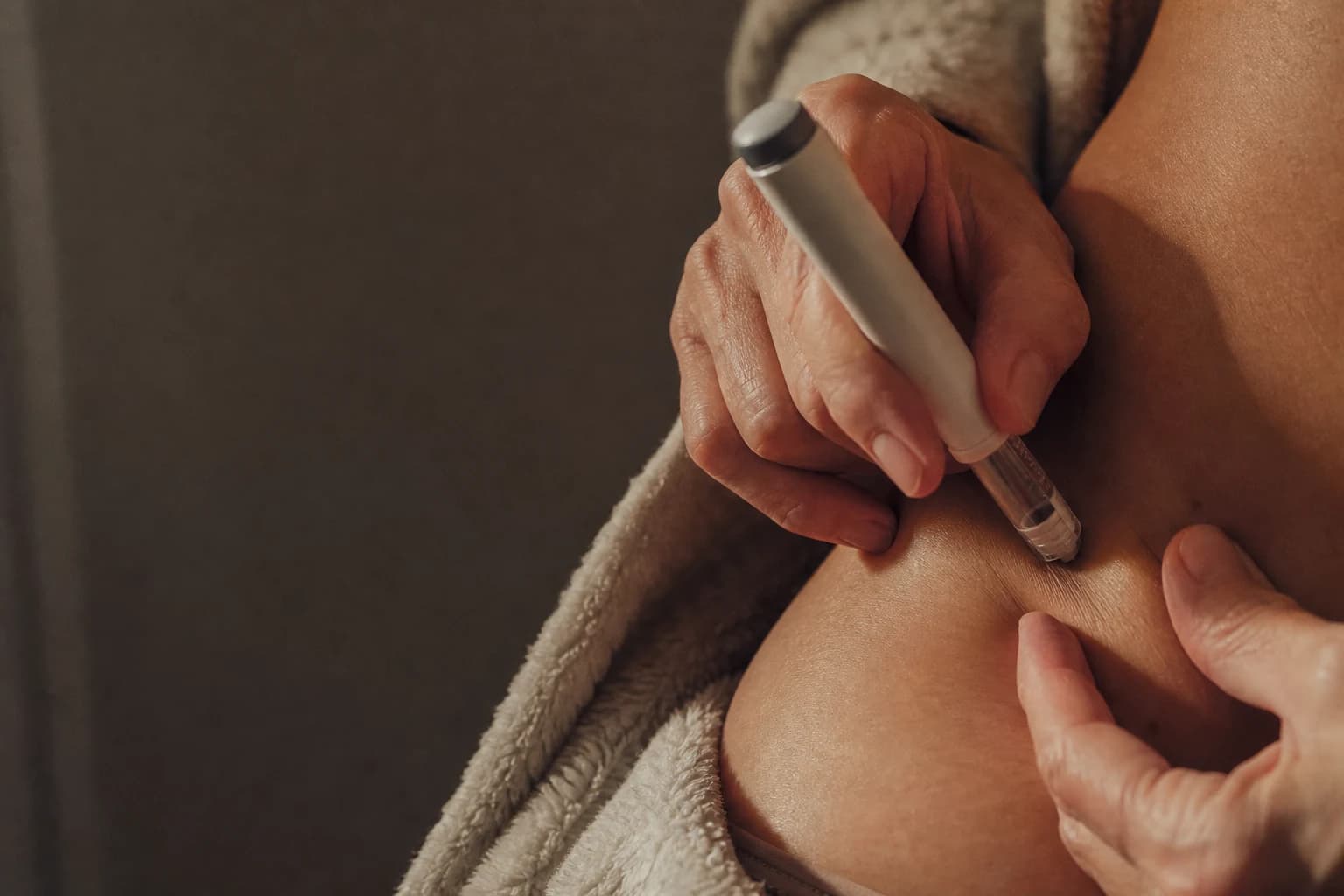
Part of How-To Guides.
Key findings
- Published obesity trials used once-weekly subcutaneous injection.
- Retatrutide has no approved consumer device or prescribing schedule.
- Trial participants should follow the supplied product’s training, storage and missed-dose instructions.
- Another medicine’s pen instructions do not validate an unknown retatrutide product.
How to Inject Retatrutide
If you are a trial participant, your study team’s instructions are the authority for your supplied product. Instructions for Mounjaro, Zepbound or Wegovy cannot be assumed to apply to retatrutide. A vial sold online as “retatrutide” or “GLP-3” is not verified clinical-trial supply.
Injection Basics
| Question | What is established |
|---|---|
| How was it given in published obesity trials? | Once weekly by subcutaneous injection. |
| Is there an approved retail device? | No. A future commercial device and instructions have not been established by an approved label. |
| Does it need reconstitution? | That cannot be answered for an unknown product. Trial participants must follow their supplied formulation’s instructions. |
| Is there a standard prescribed dose? | No approved prescribing schedule exists. Trial regimens differ. |
Injection Sites
Ask the study team to show the permitted sites for the supplied product and demonstrate the technique. Do not transfer needle, depth, angle or device instructions from another medicine: the same subcutaneous route does not mean every device works the same way.
Site Rotation
Follow the study’s instructions for changing sites and report redness, swelling, pain or other local symptoms. This review does not establish a retatrutide-specific spacing rule or guarantee that rotating sites prevents a reaction.
Dose Titration Schedule
Trials escalated doses to evaluate tolerability and efficacy. In the Phase 2 obesity trial, lower starting doses reduced gastrointestinal events. TRIUMPH-4 used 9 mg and 12 mg targets after gradual escalation. Those are study designs, not directions for starting or increasing an unapproved product.
Step-by-Step Injection Process
There is no validated universal step-by-step process for retatrutide. Before a trial injection, have the study team confirm:
- The supplied product: its identity, assigned dose and current expiry or use period.
- The device: how to prepare it, deliver a complete dose and recognize a device problem.
- The technique: permitted sites and whether assistance or supervised practice is needed.
- The schedule: what to do after a delayed dose, interrupted treatment or a dose that may not have been delivered.
- Aftercare: disposal, symptom reporting and the number to call for advice.
Storage
Storage depends on the actual formulation and container. This review found no approved retatrutide label supporting a general 28-day room-temperature allowance, a travel temperature limit or a recommended warming period before injection.
Use the written instructions supplied by the trial. If the product has been outside those conditions, damaged or left in uncertain storage, contact the study team before using it. Appearance alone cannot establish potency or sterility.
Common Injection-Related Side Effects
Gastrointestinal (Most Common)
The Phase 2 obesity trial’s common adverse events included nausea, diarrhea, vomiting and constipation. They were dose-related, mostly mild or moderate, and often occurred during escalation. These are effects of treatment, not necessarily evidence that the injection technique was wrong. There is no universal deadline by which they must resolve.
Injection Site Reactions
Tell the study team about local symptoms, especially worsening pain, spreading redness, swelling or a persistent reaction. Do not assume an online remedy or a change in injection technique will address the cause. Trial safety data also describe altered skin sensation that is distinct from a reaction at the injection site.
How Retatrutide Injection Compares
| Feature | Retatrutide | Approved tirzepatide or semaglutide injections |
|---|---|---|
| Route | Subcutaneous in published obesity trials | Subcutaneous, according to the individual product label |
| Instructions | Study-specific | Product- and device-specific approved instructions |
| Missed dose | Contact the study team | Follow that medicine’s current label |
| Device and storage | Do not assume a future commercial presentation | Can vary by brand, presentation and country |
Sharing a manufacturer or route does not establish an identical pen, priming process, storage period or missed-dose window.
Frequently Asked Questions
Is retatrutide a pill or injection?
How often do you inject retatrutide?
Published obesity trials used once-weekly administration. A trial participant’s timing, delayed-dose and restart instructions must come from the study team; twice-weekly splitting is not established by these results.
Does the injection hurt?
Discomfort depends on the device, technique and individual. There is no approved retatrutide needle specification or warming instruction to apply universally. Ask the study team to demonstrate the supplied device and report persistent pain or reactions.
Can I inject retatrutide myself?
Trial participants should follow the training and supervision requirements of their study. The fact that some approved GLP-1 pens permit self-administration does not validate an unknown retatrutide product or device.
What happens if I miss a dose?
Contact the study team for the protocol that applies to your assigned treatment. Do not borrow a catch-up window from semaglutide or tirzepatide, double a dose or guess how to restart after an interruption.
Can you inject retatrutide into a vein or muscle?
Those routes are not the route used in the published obesity trials, which used subcutaneous injection. Do not improvise a different route. If an injection may have gone wrong, contact the study team promptly instead of repeating the dose to compensate.
Sources
- Jastreboff, A.M., et al. (2023). Retatrutide Phase 2 obesity trial. New England Journal of Medicine.
- Lilly. (2025). TRIUMPH-4 trial results and escalation protocol.
- FDA. Concerns with unapproved GLP-1 drugs.
- Novo Nordisk. Wegovy prescribing information.
- FDA. Zepbound prescribing information.
Questions to ask your doctor
- Given my health history, is a GLP-1 medication appropriate for me at all?
- Which approved option (e.g. semaglutide, tirzepatide) best fits my goals?
- What starting dose and titration pace would you use, and why?
- What side effects should I watch for, and when should I call you?
- How will we monitor whether it's working and when to adjust?
- What this is
- Educational information, not medical advice. It reports published research — it doesn’t recommend that you use, obtain, or supply anything.
- Regulatory status
- Retatrutide and similar peptides are investigational — not approved by the FDA or any regulator. Semaglutide and tirzepatide are prescription-only medicines, available only through a licensed prescriber.
- Our standard
- Every claim traces to a primary source. We label the strength of evidence and flag estimates as estimates — never as clinical fact.
- No commercial ties
- We don’t sell, supply, or link to suppliers of any medicine, and aren’t affiliated with any manufacturer.
Do not make decisions about your health without consulting a qualified healthcare provider. For trial enrolment, see ClinicalTrials.gov. More on how we review.
Sources
- Phase 2 trial (NEJM)
NEJM
- Find retatrutide trials
ClinicalTrials.gov
 NEJM
NEJM The Lancet
 JAMA
JAMA FDA
FDA ClinicalTrials.gov
Related reading
Retatrutide Dosage & Dosing Guide: Titration, Missed Doses, Taper
Phase 3 titration schedule (2→4→6→9→12 mg), missed-dose protocol, taper guidance, and dose-by-dose weight loss data.

Retatrutide Side Effects & Safety Data (2026)
Separate trial tables for retatrutide GI effects and dysesthesia, with rare-event findings and current safety uncertainties.

What Is Retatrutide (GLP-3)?
Eli Lilly’s investigational triple receptor agonist: how it works, what trials show, and why GLP-3 is an informal nickname.
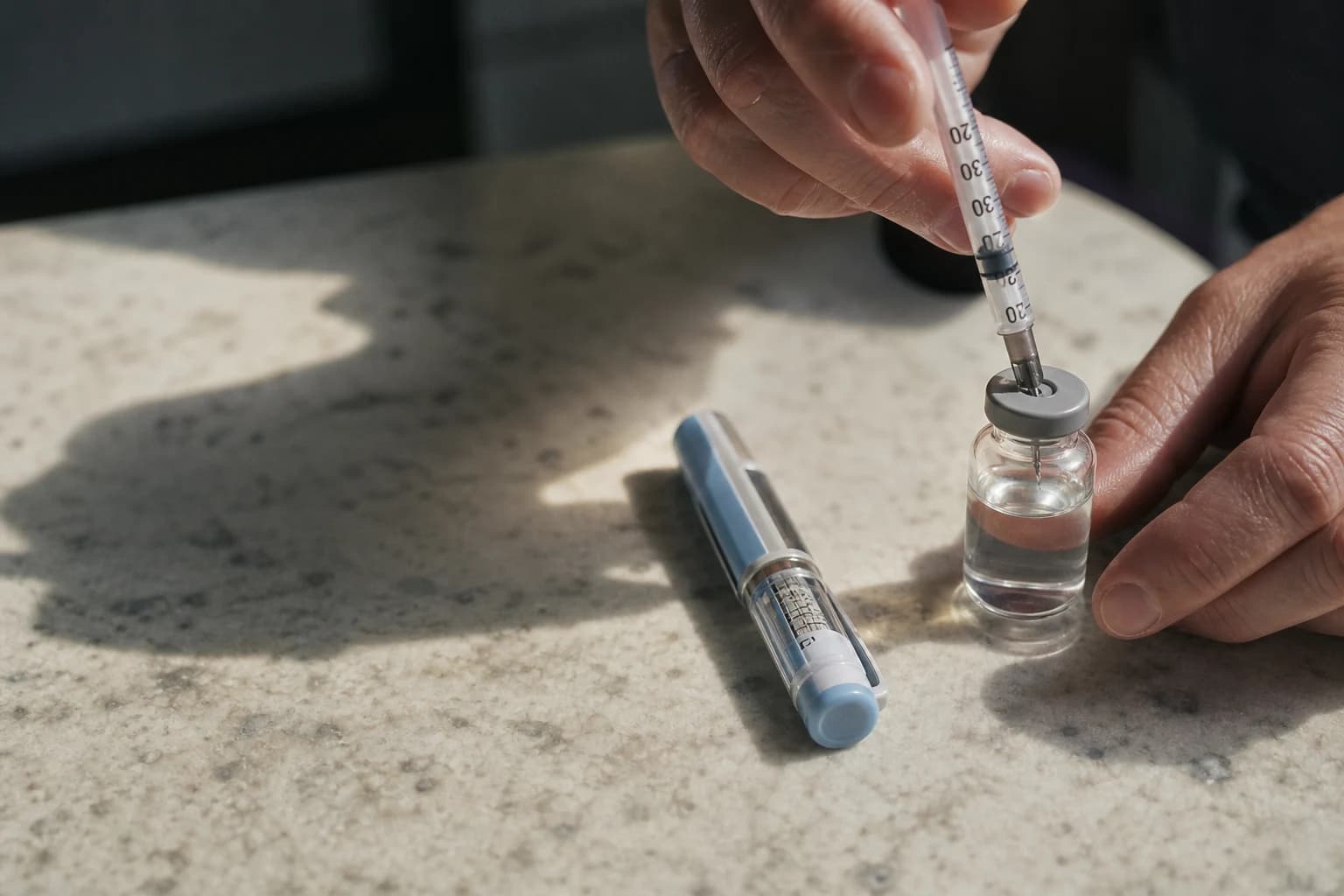
How to Reconstitute Retatrutide (and Why You Shouldn't)
Concentration math cannot establish vial identity, sterility or stability. Trial participants need product-specific study instructions.

Retatrutide Calculator: Units & Reconstitution
Interactive dose calculator, syringe-unit tables for every reconstitution setup, and projected weight loss by starting weight.
Keep exploring
Explore all guides topics →