high-protein · small-meal · 13 min
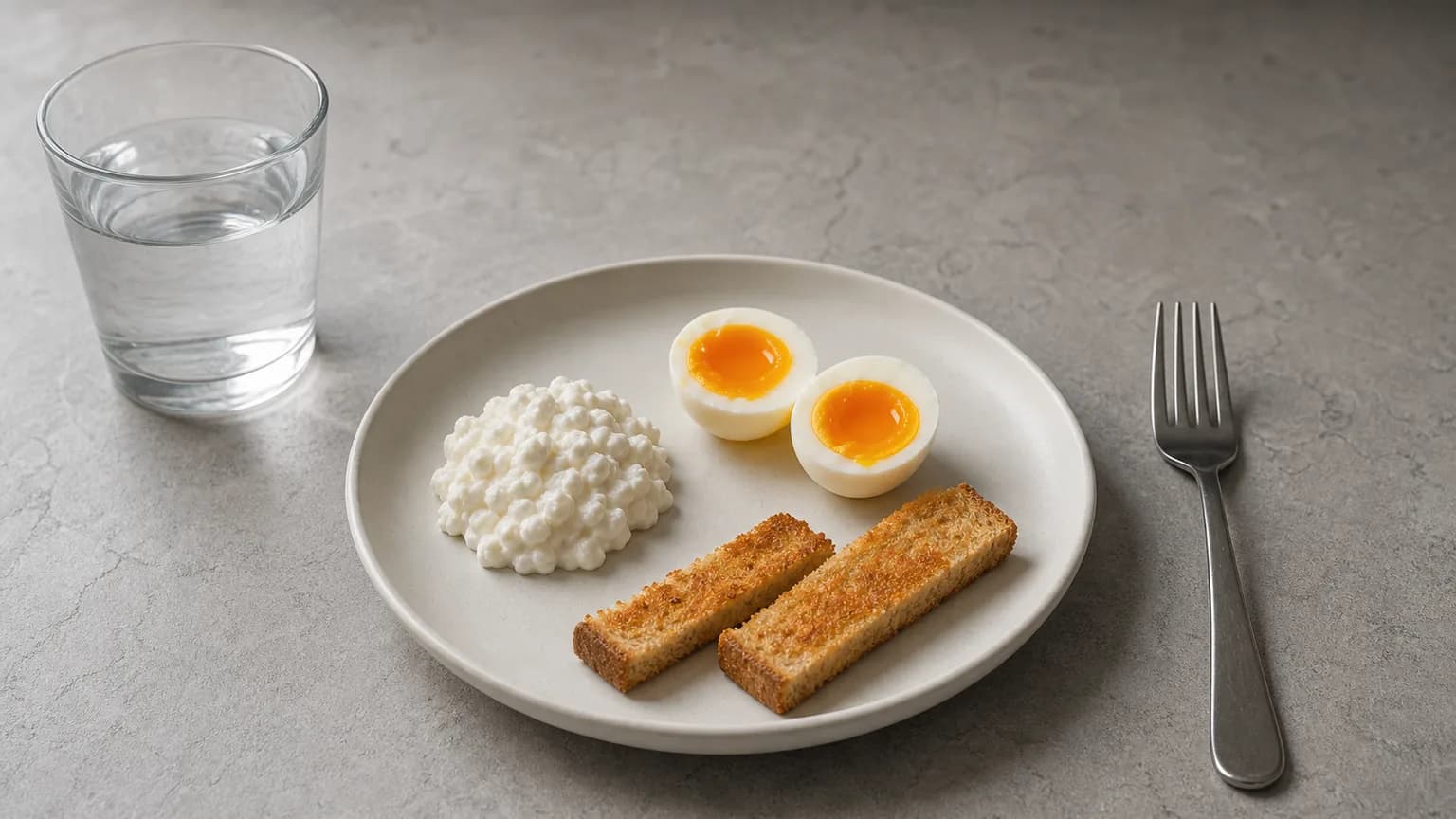
Cottage cheese + soft-egg plate
High-protein small meal — cottage cheese, one soft egg, toast soldiers — when you need real food in a modest footprint.
By GLP-3 Wiki · Updated July 2026 · How we review
makes 1 serving
One serving: 1 portion. Nutrition is estimated per serving; changing the batch size scales the ingredients.
Prep: 5 min · Cook: 8 min · Total: 13 min
Ingredients
- 150 gLow-fat cottage cheese — about ⅔ cup
- 1Egg — soft-boiled or poached
- 0.5 sliceWhole-grain toast (optional) — soldiers; skip if bread is rough
- 1 pinchBlack pepper or everything seasoning (optional)
- 3Cherry tomatoes (optional)
Steps
Soft-cook the egg
Soft-boil about 6–7 minutes (or poach). Cool briefly under cold water so the white sets and the yolk stays soft — easier on a sensitive gut than a fried egg.
Scoop the cottage cheese
Put the cottage cheese in a small bowl or on one side of a small plate. This is the protein bulk; the egg is the top-up.
Plate small
Halve the egg, set it beside the cottage cheese, and add toast soldiers only if bread sounds good. Pepper if you want flavour without volume.
Eat the soft bits first
Start with cottage cheese and yolk. Stop when you feel full — leftover toast can wait.
When you can barely eat
Skip the egg and toast. Eat 100 g cottage cheese cold, straight from a small ramekin, in a few spoonfuls over 10–15 minutes. Still roughly 12–14 g protein with almost no prep. If dairy is off, swap for a half glass of Fairlife-class high-protein milk instead.
~13 g protein on this smaller version
- 100 g Low-fat cottage cheese
Notes
- Eggs and cottage cheese are the community default for “I need protein but not a meal.”
- If sulfur burps hit after eggs, drop the egg and double the cottage cheese portion next time.
- No dose milligrams on this page — phase language only.
Download the 50-recipe book (PDF)
Prints ingredients for 1 serving, with nutrition per serving.
- What this is
- Educational information, not medical advice. It reports published research — it doesn’t recommend that you use, obtain, or supply anything.
- Regulatory status
- Retatrutide and similar peptides are investigational — not approved by the FDA or any regulator. Semaglutide and tirzepatide are prescription-only medicines, available only through a licensed prescriber.
- Our standard
- Every claim traces to a primary source. We label the strength of evidence and flag estimates as estimates — never as clinical fact.
- No commercial ties
- We don’t sell, supply, or link to suppliers of any medicine, and aren’t affiliated with any manufacturer.
Do not make decisions about your health without consulting a qualified healthcare provider. For trial enrolment, see ClinicalTrials.gov. More on how we review.