shot-day · shake · 3 min
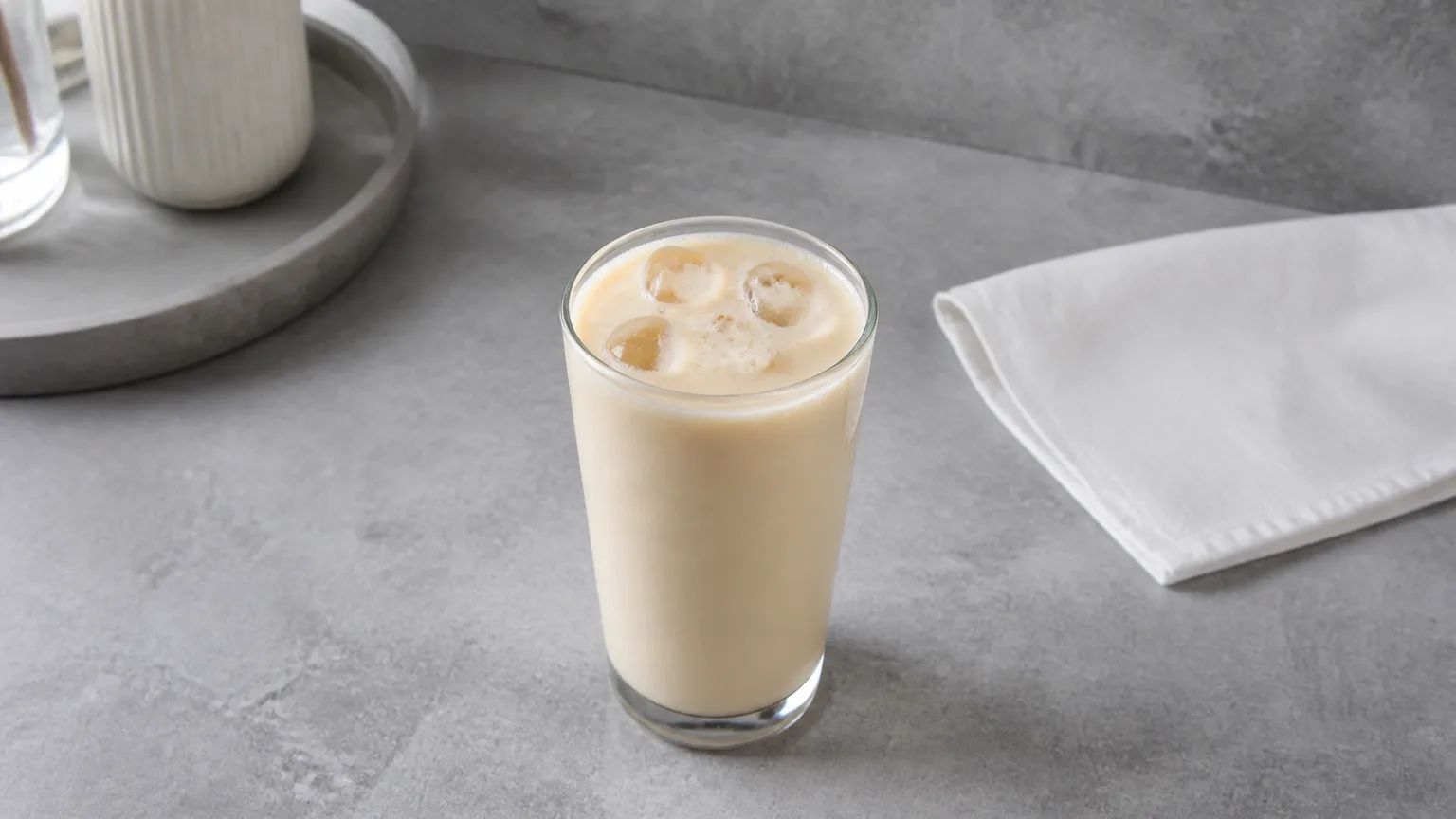
Anti-nausea protein shake
Cold high-protein milk + whey, ice-thin, when solids will not stay down and you still need grams.
By GLP-3 Wiki · Updated July 2026 · How we review
makes 1 serving
One serving: 1 portion. Nutrition is estimated per serving; changing the batch size scales the ingredients.
Prep: 3 min · Cook: 0 min · Total: 3 min
Ingredients
- 300 mlHigh-protein ultra-filtered milk — Fairlife-class, named editorially — any similar ultra-filtered milk works
- 0.5 scoopWhey protein isolate — ~12–15 g powder; unflavoured or vanilla
- 4Ice cubes
- 50 mlWater (optional) — to thin if it feels heavy
- 30 mlGinger tea, cooled (optional) — only if ginger sits well for you
Steps
Chill everything
Use cold milk and ice. Warm shakes are harder when nauseous; cold often lands better.
Blend thin
Blend milk, whey, ice, and optional water until completely smooth and drinkable through a straw. If it is thick like a milkshake, add more water — thickness is the enemy on a bad gut day.
Sip, do not chug
Pour into a glass and take small sips over 20–30 minutes. Stop if nausea rises; resume later. Protein still counts in passes.
When you can barely eat
Halve the pour: 150 ml high-protein milk, no extra whey, ice only. Sip half a glass (~15–20 g protein). Keep the rest cold for later the same day. Skip ginger if any flavour is too much.
~18 g protein on this smaller version
- 150 ml High-protein ultra-filtered milk
- 2 Ice cubes
Notes
- Fairlife and similar ultra-filtered milks are named editorially as the community default — no affiliate or buy links.
- If dairy is the problem, use a ready-to-drink plant protein that you already tolerate; still keep it ice-cold and thin.
- This is mechanical protein intake, not a meal replacement diet. If you cannot keep fluids down, contact your prescriber.
- No milligram dose numbers on this page.
Download the 50-recipe book (PDF)
Prints ingredients for 1 serving, with nutrition per serving.
- What this is
- Educational information, not medical advice. It reports published research — it doesn’t recommend that you use, obtain, or supply anything.
- Regulatory status
- Retatrutide and similar peptides are investigational — not approved by the FDA or any regulator. Semaglutide and tirzepatide are prescription-only medicines, available only through a licensed prescriber.
- Our standard
- Every claim traces to a primary source. We label the strength of evidence and flag estimates as estimates — never as clinical fact.
- No commercial ties
- We don’t sell, supply, or link to suppliers of any medicine, and aren’t affiliated with any manufacturer.
Do not make decisions about your health without consulting a qualified healthcare provider. For trial enrolment, see ClinicalTrials.gov. More on how we review.