Editorially reviewed · Last updated September 8, 2026 · How we review

Part of YouTube & Expert Fact Checks.
David DeMesquita's Retatrutide Injection Guide: What He Shows and What You Should Know
This page compares the claims recorded in DeMesquita’s video with published trial evidence. It does not validate the product or demonstrate a clinically tested preparation method. Retatrutide remains investigational; a vial sold as “GLP-3” is not an approved medicine.
This review checks the claims recorded in our existing article against primary research. We could not retrieve an independent transcript for this update, so the quoted wording and timestamps have not been freshly verified.
The "GLP-3" Labeling Problem
DeMesquita opens by explaining why the product is labeled "GLP-3" rather than retatrutide:
"Most bottles will be labeled as GLP-3 because it is technically not allowed to be sold right now. It's not FDA approved and Eli Lilly owns a patent so they don't want anyone to sell it."
— David DeMesquita
Retatrutide is not FDA-approved, but changing a label to “GLP-3” or “research use only” does not establish legal status, identity or quality. FDA warns against products sold for human use under research labels and says retatrutide cannot be used in compounding under federal law. The product in this video was not independently tested for this review.
Reconstitution: His Method
DeMesquita shows a powder vial, adds bacteriostatic water, chooses a dilution, rolls the vial and recommends refrigeration. Those are observations about his demonstration, not validated retatrutide preparation instructions.
| What he demonstrates | What the evidence establishes |
|---|---|
| Bacteriostatic water | No approved retatrutide label validates this solvent for the product shown. |
| A chosen dilution and syringe markings | Syringe units measure volume, not milligrams of retatrutide. Any calculation depends on an accurate vial content and final concentration, neither independently verified here. |
| Rolling the vial | A generic peptide-handling rule does not establish retatrutide-specific stability or potency. |
| Refrigeration | Storage conditions and a beyond-use date require formulation-specific data; refrigeration cannot establish sterility. |
An apparently tidy technique cannot verify identity, potency or sterility. A certificate reporting one test, such as purity, would not by itself validate every aspect of an injectable product either.
His Dosing Compared With Clinical Trials
DeMesquita reveals he uses a notably low dose compared to clinical trials:
"I actually do a split dose. I only do 0.5 milligrams per week. I do a very small amount... I actually got a decent appetite reduction even at low dosages of 1 milligram per week."
— David DeMesquita
The quoted wording mentions both 0.5 mg per week and a split dose. It does not establish a single unambiguous regimen, so this review does not resolve that discrepancy into a dosing instruction. His stated blood-sugar rationale is a personal account, not evidence for treating Graves’ disease with retatrutide.
| Dosing Context | Dose | Notes |
|---|---|---|
| DeMesquita's dose | 0.5–1 mg/week | Personal account; exact weekly regimen is ambiguous |
| Phase 3 lowest dose | 2 mg/week (starting) | Titration starting point in TRIUMPH program |
| Phase 3 target doses | 4, 9 or 12 mg/week in TRIUMPH-1 | Trial-specific target doses, not a self-treatment schedule |
| Phase 2 lowest obesity-trial dose | 1 mg/week | 8.7% mean weight loss at 48 weeks under the efficacy estimand |
The Phase 2 obesity trial tested 1 mg weekly and reported 8.7% mean weight loss at 48 weeks, versus 2.1% with placebo, under the efficacy estimand. The earlier 3.19% figure on this page was incorrect for that study. A personal report at 0.5 mg does not establish effectiveness, and the trial result does not validate a grey market product or a split-dose regimen.
Injection Technique
DeMesquita demonstrates subcutaneous injection around the belly button, using a pinch-and-inject technique:
"I go around the belly button. The left side for me feels way better than my right side... I take the skin and I pull it from my body and then I pop it in."
— David DeMesquita
He also recommends rolling the skin and applying heat for welts. This review found no retatrutide trial evidence validating those measures; persistent or worsening injection-site symptoms need clinical assessment, not an assumed technique fix.
Retatrutide’s published obesity trials used once-weekly subcutaneous injection. They do not establish the claimed half-life advantage over intramuscular injection. Instructions for another medicine or a personal demonstration cannot validate this product’s administration.
Combining Multiple Peptides in One Syringe
DeMesquita mentions combining multiple compounds into a single injection:
"What's in here right now is going to be some retatrutide, HCG, FSH, BPC-157, and TB-500."
— David DeMesquita
He acknowledges that water-based solutions can technically be combined but advises keeping them in separate vials for accurate measurement. The practice of combining multiple peptides in a single syringe is common in the self-administration community but raises several concerns:
- This review found no published compatibility data on retatrutide combined with HCG, FSH, BPC-157, or TB-500 in solution
- Compatibility cannot be inferred because the individual ingredients dissolve in water
- Measurement becomes more complex when several compounds are combined
- Adverse event attribution becomes more difficult when multiple compounds are injected simultaneously
Frequently Asked Questions
Who is David DeMesquita?
David DeMesquita is a fitness content creator who produces videos on peptides, performance-enhancing compounds, and body composition. He is not a pharmacist, physician, or medical researcher. His retatrutide video demonstrates practical reconstitution and injection technique for grey market product.
Is his reconstitution technique correct?
It cannot be validated from the demonstration. Retatrutide has no approved preparation instructions for the vial shown, and its contents were not independently tested for this review. A dilution calculation does not establish identity, potency, sterility or a safe storage period.
Is 0.5mg retatrutide per week effective?
The Phase 2 obesity trial studied 1 mg weekly, reporting 8.7% mean weight loss at 48 weeks versus 2.1% with placebo under its efficacy analysis. It did not establish the effectiveness of 0.5 mg weekly or twice-weekly splitting. A personal appetite report cannot supply that evidence.
Is it safe to combine retatrutide with other peptides in one syringe?
This review found no published compatibility or clinical safety evidence for combining retatrutide with HCG, FSH, BPC-157 and TB-500 in one syringe. Being water-based does not establish compatibility, and simultaneous use makes adverse-effect assessment more difficult.
Should I follow this video to inject retatrutide?
Sources
-
DeMesquita, D. (2026). "How to Measure and Inject Retatrutide (GLP-3 Triple Agonist)." YouTube. Watch on YouTube
-
Jastreboff, A.M., et al. (2023). Triple-Hormone-Receptor Agonist Retatrutide for Obesity — A Phase 2 Trial. New England Journal of Medicine. DOI: 10.1056/NEJMoa2301972
-
Eli Lilly and Company. (2025). Lilly's retatrutide achieved significant weight loss and pain relief in adults with obesity and knee osteoarthritis. Press release
- What this is
- Educational information, not medical advice. It reports published research — it doesn’t recommend that you use, obtain, or supply anything.
- Regulatory status
- Retatrutide and similar peptides are investigational — not approved by the FDA or any regulator. Semaglutide and tirzepatide are prescription-only medicines, available only through a licensed prescriber.
- Our standard
- Every claim traces to a primary source. We label the strength of evidence and flag estimates as estimates — never as clinical fact.
- No commercial ties
- We don’t sell, supply, or link to suppliers of any medicine, and aren’t affiliated with any manufacturer.
Do not make decisions about your health without consulting a qualified healthcare provider. For trial enrolment, see ClinicalTrials.gov. More on how we review.
Sources
- How to Measure and Inject Retatrutide (YouTube)
YouTube
- Phase 2 trial (NEJM)
New England Journal of Medicine
 NEJM
NEJM The Lancet
 JAMA
JAMA FDA
FDA ClinicalTrials.gov
Related reading
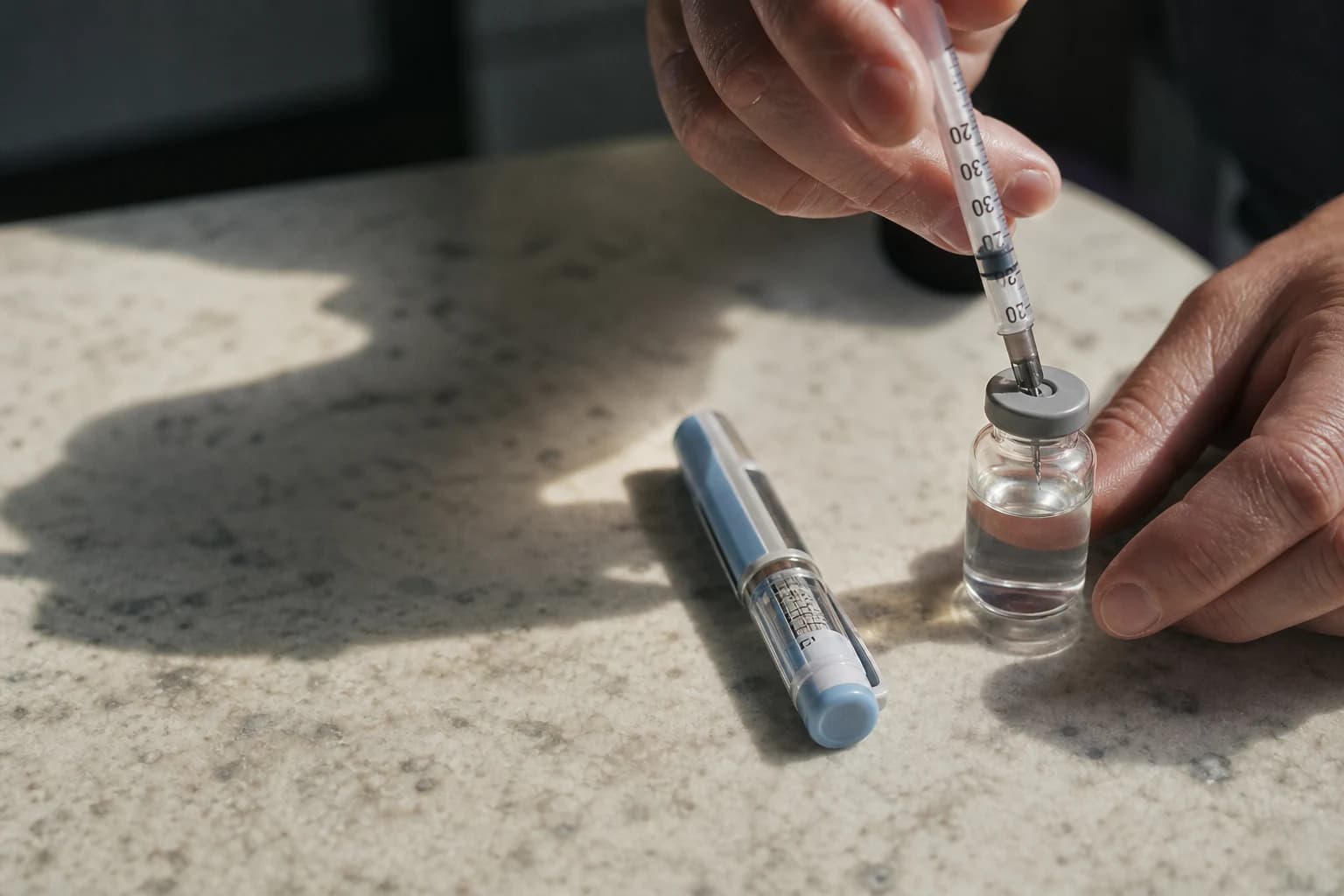
How to Reconstitute Retatrutide (and Why You Shouldn't)
Concentration math cannot establish vial identity, sterility or stability. Trial participants need product-specific study instructions.
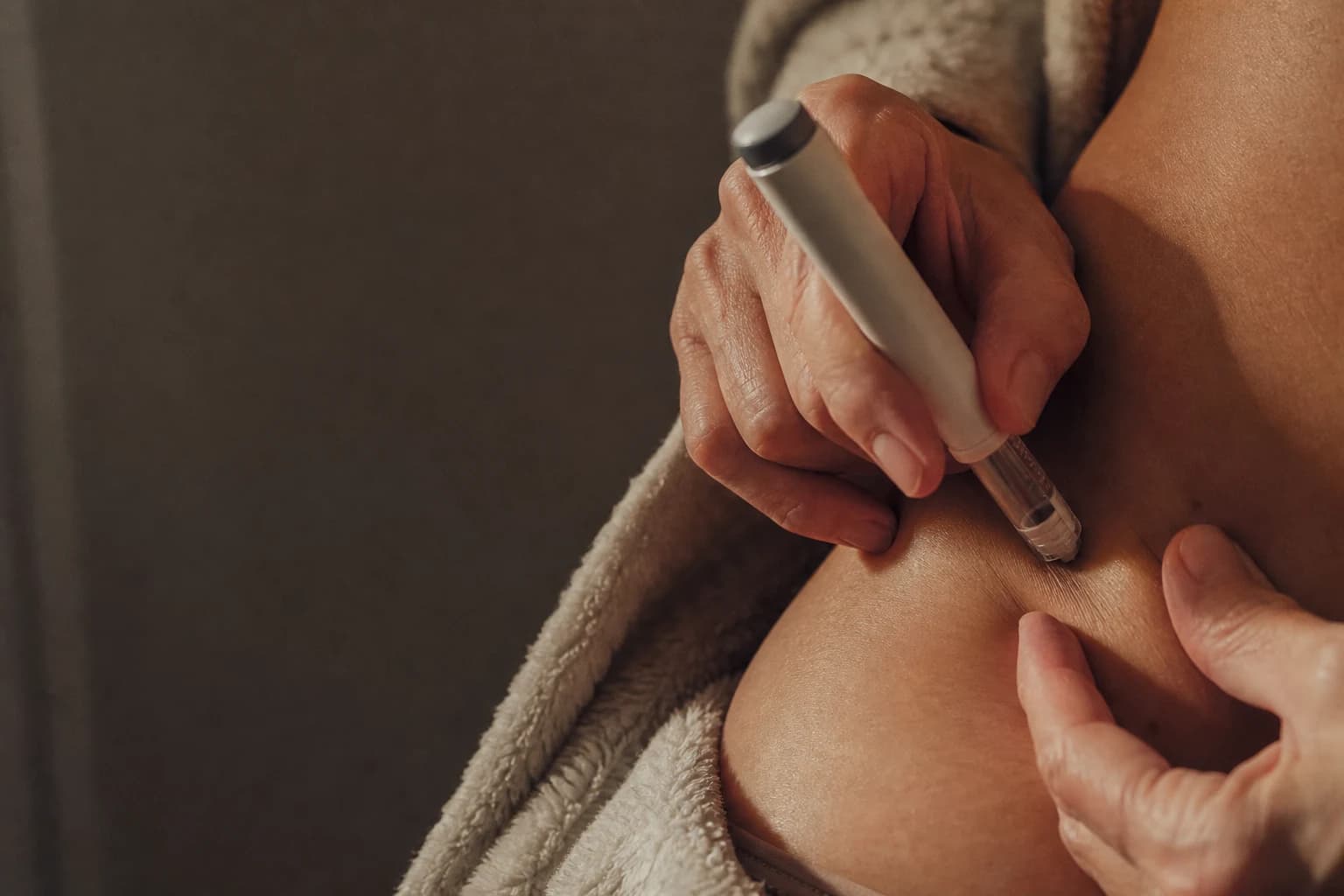
How to Inject Retatrutide
Trial administration facts and questions for the study team; no approved consumer device or universal injection instructions.
Retatrutide Dosage & Dosing Guide: Titration, Missed Doses, Taper
Phase 3 titration schedule (2→4→6→9→12 mg), missed-dose protocol, taper guidance, and dose-by-dose weight loss data.

Andrew Huberman on Retatrutide: What He Said and What the Data Shows
Huberman called retatrutide 'the peptide that changes everything.' Here's what he said and what the data actually shows.
Keep exploring
Explore all fact checks topics →