Editorially reviewed · Last updated September 8, 2026 · How we review
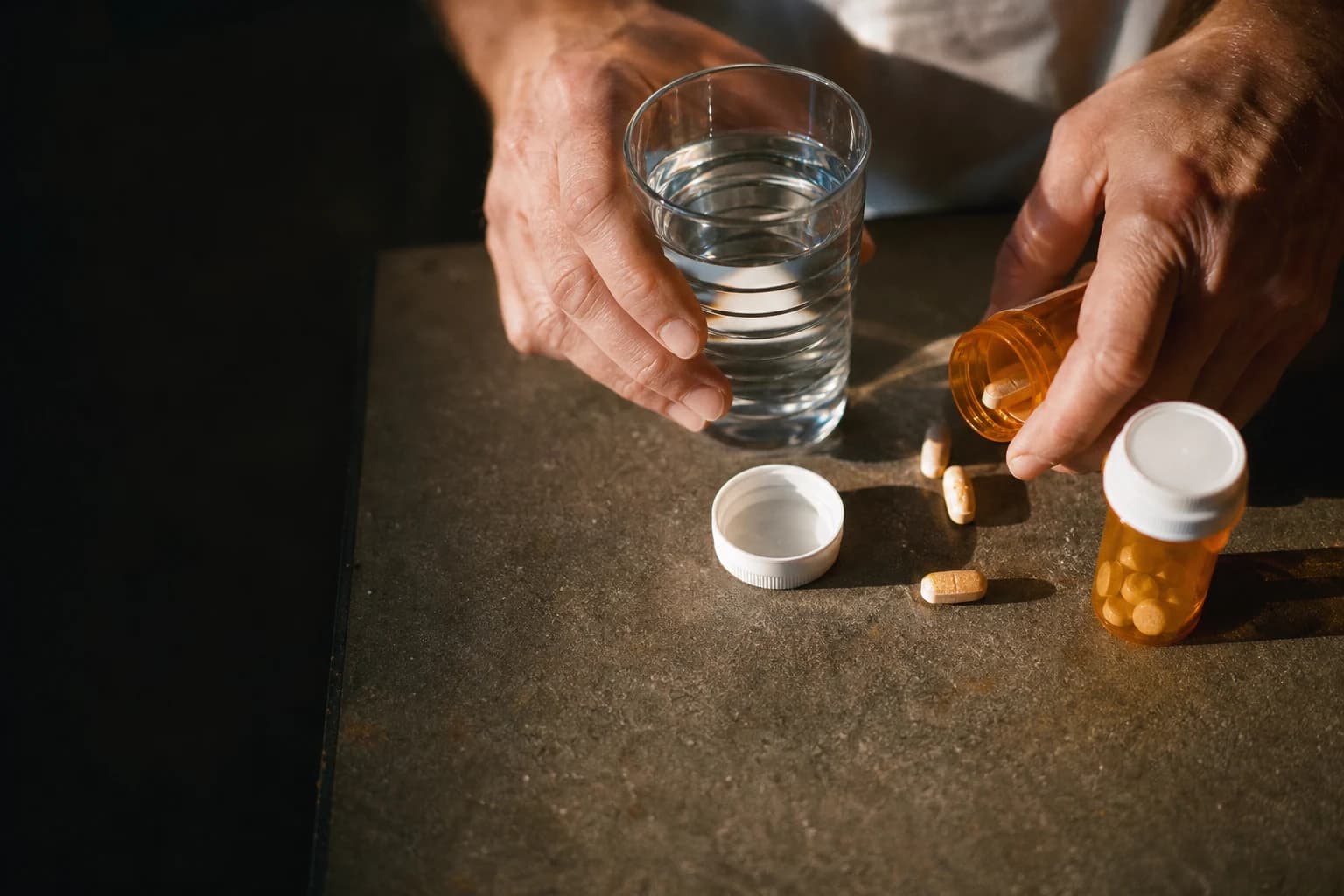
Part of Weight Loss Drug Comparison Index.
Orforglipron vs Rybelsus (Oral Semaglutide): Two Oral GLP-1 Pills Compared
In ACHIEVE-3, orforglipron outperformed the tested oral semaglutide doses on blood sugar and weight in adults with type 2 diabetes. That is a direct trial result, but it does not make Foundayo an approved diabetes replacement or establish superiority over oral Wegovy.
Side-by-Side Comparison
| Foundayo (orforglipron) | Rybelsus (oral semaglutide) | |
|---|---|---|
| Developer | Eli Lilly | Novo Nordisk |
| Molecule | Non-peptide small molecule | Peptide formulated with SNAC |
| Receptor and route | GLP-1; daily pill | GLP-1; daily pill |
| US approved uses | Adult weight reduction and long-term maintenance | Adult type 2 diabetes; cardiovascular risk reduction in eligible adults with type 2 diabetes |
| Food and water routine | With or without food | Empty stomach in the morning; up to 4 oz water; wait at least 30 minutes |
| Marketed tablet strengths | 0.8, 2.5, 5.5, 9, 14.5 and 17.2 mg | 3, 7 and 14 mg |
| Diabetes head-to-head evidence | ACHIEVE-3 tested an investigational formulation | ACHIEVE-3 tested 7 mg and 14 mg oral semaglutide |
How the Mechanisms Differ
Orforglipron: Small Molecule, No Fasting Requirement
Laboratory descriptions such as “partial agonist” or “biased agonism” do not establish a clinical weight-loss ceiling or predict which medicine an individual will tolerate. The head-to-head trial is more useful than an assumed ranking based on chemistry.
Rybelsus: Peptide Needing Protection
Weight Loss Comparison
Head-to-Head: ACHIEVE-3 Trial
| Week 52 outcome | Oral semaglutide 14 mg | Orforglipron 36 mg (trial formulation) |
|---|---|---|
| HbA1c change, efficacy estimand | −1.4 percentage points | −2.2 percentage points |
| Weight change, efficacy estimand | −5.3% | −9.2% |
| HbA1c below 7%, efficacy estimand | 66.1% | 85.4% |
| HbA1c change, treatment-regimen estimand | −1.5 percentage points | −1.9 percentage points |
| Weight change, treatment-regimen estimand | −5.3% | −8.2% |
Obesity-Specific Trial Data
Swipe sideways to see every column.
| Study and population | Dose described by source | Timepoint | Mean weight change |
|---|---|---|---|
| ATTAIN-1; adults without diabetes | Orforglipron 36 mg trial formulation | 72 weeks | −12.4% efficacy estimand; −11.2% treatment-regimen estimand |
| OASIS 1; adults without diabetes | Oral semaglutide 50 mg research dose | 68 weeks | −15.1% treatment-policy estimand |
| OASIS 4 / Wegovy label Study 7; adults without diabetes | Oral semaglutide 25 mg | 64 weeks | −13.6% intention-to-treat analysis in the label |
Weight Loss Thresholds (ATTAIN-1)
Side Effects Comparison
Dosing Convenience: The Core Differentiator
Rybelsus Dosing Restrictions
The label says to:
- Take it on an empty stomach in the morning.
- Swallow the tablet whole with up to 4 oz of plain water.
- Wait at least 30 minutes before food, other drinks or other oral medicines.
- Do not split, crush, chew or dissolve the tablet.
Orforglipron: No Fasting Requirement
Cost and Availability
Rybelsus (Available Now)
Orforglipron (Available as Foundayo)
A lower manufacturing cost does not establish a lower pharmacy bill. Compare what you would pay at the prescribed maintenance dose, including the conditions for refills, instead of relying on projected prices from before approval.
Oral Semaglutide at Higher Doses: The Wegovy Pill
The names and strengths are easy to confuse:
- Rybelsus: 3, 7 and 14 mg semaglutide tablets with diabetes-related indications.
- Ozempic tablets: a different semaglutide formulation in 1.5, 4 and 9 mg strengths; not substitutable with Rybelsus milligram for milligram.
- Wegovy tablets: 1.5, 4 and 9 mg escalation strengths followed by a 25 mg daily maintenance dose for its adult labeled uses.
- Oral semaglutide 50 mg: the dose studied in OASIS 1, not a marketed Wegovy tablet strength in the current US label.
For a weight-management decision, Foundayo and oral Wegovy have a closer overlap in approved purpose than Foundayo and Rybelsus. ACHIEVE-3 does not answer that comparison.
Where Retatrutide Fits
Frequently Asked Questions
Is orforglipron better than Rybelsus for weight loss?
In ACHIEVE-3, the highest orforglipron research dose produced greater average weight loss than oral semaglutide 14 mg in adults with type 2 diabetes: 9.2% versus 5.3% using the efficacy analysis at 52 weeks. That does not compare Foundayo with oral Wegovy or make Foundayo an approved replacement for diabetes treatment.
Does orforglipron have to be taken on an empty stomach?
No. Foundayo can be taken with or without food. It still has medicine interactions and dose-escalation instructions, so “no fasting requirement” does not mean “no restrictions.”
Why does Rybelsus need to be taken on an empty stomach?
The tablet uses SNAC to help semaglutide absorb through the stomach. The label’s morning fasting, water and waiting instructions support that absorption. Follow the instructions for the exact semaglutide product you were prescribed.
Can I switch from Rybelsus to orforglipron?
Ask the prescriber what each medicine is treating. Foundayo’s current approval is for adult weight management; Rybelsus has diabetes and cardiovascular indications. There is no milligram-for-milligram conversion, and the Foundayo label does not recommend combining it with another GLP-1 receptor agonist. Do not stop a working diabetes treatment simply because another medicine is a more convenient pill.
When will orforglipron be available?
It is already available in the US as prescription Foundayo for eligible adults needing weight management. The former forecast of an FDA decision in Q2 2026 is outdated.
What are the side effects of orforglipron compared to Rybelsus?
Both can cause gastrointestinal symptoms and have important warnings. ACHIEVE-3 reported more adverse-event discontinuations with the highest orforglipron research dose than with oral semaglutide 14 mg. This is a trial-specific finding, not proof that one drug is safer for every person.
Is Rybelsus approved for weight loss?
No. Rybelsus has adult type 2 diabetes and cardiovascular risk-reduction indications. Oral Wegovy is the semaglutide tablet with a weight-management indication, with a 25 mg daily maintenance dose after escalation.
Sources
- Eli Lilly. Foundayo prescribing information.
- Novo Nordisk. Rybelsus and Ozempic tablets prescribing information.
- Eli Lilly. Detailed ACHIEVE-3 results, published in The Lancet. February 26, 2026.
- Eli Lilly. ATTAIN-1 full results. September 16, 2025.
- Knop FK, et al. OASIS 1: oral semaglutide 50 mg. The Lancet, 2023.
- Wharton S, et al. OASIS 4: oral semaglutide 25 mg. New England Journal of Medicine, 2025.
- Novo Nordisk. Wegovy prescribing information.
- Eli Lilly. Foundayo coverage and savings.
- What this is
- Educational information, not medical advice. It reports published research — it doesn’t recommend that you use, obtain, or supply anything.
- Regulatory status
- Foundayo is FDA-approved for adult weight management. Rybelsus is approved for adult type 2 diabetes and cardiovascular risk reduction in eligible adults with type 2 diabetes. Retatrutide remains investigational.
- Our standard
- Every claim traces to a primary source. We label the strength of evidence and flag estimates as estimates — never as clinical fact.
- No commercial ties
- We don’t sell, supply, or link to suppliers of any medicine, and aren’t affiliated with any manufacturer.
Do not make decisions about your health without consulting a qualified healthcare provider. For trial enrolment, see ClinicalTrials.gov. More on how we review.
Sources
- Rybelsus and Ozempic tablets prescribing information
Novo Nordisk
- Foundayo prescribing information
Eli Lilly
- ACHIEVE-3 detailed results
Eli Lilly
 NEJM
NEJM The Lancet
 JAMA
JAMA FDA
FDA ClinicalTrials.gov
Related reading
Foundayo (Orforglipron): Lilly's Oral GLP-1 Pill Explained
Foundayo is Lilly’s approved daily oral GLP-1 medicine. FDA trial results, dosing, side effects and dose-specific US savings terms explained.

Orforglipron vs Tirzepatide (Zepbound): Oral Pill vs Weekly Injection
Daily Foundayo and weekly tirzepatide have different labeled uses. Separate trials do not prove that one is twice as effective.
Retatrutide Pill vs Injection: Is There an Oral Formulation?
Retatrutide has no approved pill or injection. Foundayo and oral Wegovy are different approved medicines.
Keep exploring
Explore all compare topics →